



Rehabilitating inner-city housing

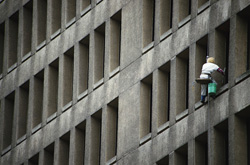
Large parts of Europe, in particular its cities, were destroyed during World War II. During the reconstruction that followed, a large number of low-cost housing developments were erected. Today inhabitants of these so-called estates are often low-income minorities struggling to make ends meet. Aiming to improve the quality of life of the people both in and around these estates, the EESD Programme funded the RESTATE project. The approach involved case studies in ten different European countries. In Hungary, the Metropolitan Research Institute, an organisation with consulting experience in housing policy and urban development, wrote a report about two case studies in the cities of Budapest (the Havanna estate) and Nyiregyhaza (the Jósaváros estate). The report describes the survey methodology, the estates, the results of the interviews, the impact of policy measures and the future outlook. While the inhabitants of Havanna and Jósaváros were more optimistic than expected, they did identify problems with building deterioration and street pollution. It was discouraging to learn that residents were for the most part unaware of the measures implemented by the government to improve their living conditions. This highlights the need to put a greater emphasis on communication. While a high rate of occupant-turnover was found at both sites, important differences between the two housing projects were identified. Havanna residents were more family-oriented while those of Jósaváros were more financially strapped and had not developed as strong a bond with their home. Apart from comparisons between the two Hungarian estates, comparison with other RESTATE case studies is made possible by maintaining a common reporting structure. As for recommendations obtained directly from the residents, building renovation and beautification of the local environment were the main priorities. The knowledge gained from these and the other RESTATE case studies will help shape future policy recommendations to promote rehabilitation of these important communities.