Manufacturing state-of-the-art catalysts

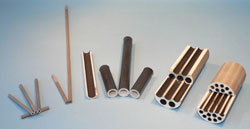
Catalysts promote chemical reactions without themselves being consumed in the process. They are used in a variety of industrial applications, for instance in catalytic converters in cars which help convert pollutants in the exhaust stream into less harmful compounds before they are released to the atmosphere. The Technical Chemistry Research Group of DECHEMA E.V. undertook research on new catalysts as a participant in the NEOPS project. The objective of NEOPS was to discover new, low-cost catalysts to produce hydrogen peroxide, an extremely useful inorganic chemical that can easily be reduced to water. The German scientists focused their efforts on palladium, a rare metal with a high affinity for hydrogen. Several methods of Metal Organic Chemical Vapor Deposition (MOCVD) were developed to disperse the palladium onto tubular ceramic membranes. The membranes were then analysed using electron microscopy, atomic absorption spectroscopy and other methods to evaluate the depth and uniformity of the palladium deposit. Finally, the new dispersed palladium membranes were compared against conventional dense palladium membranes. The results indicate that the dispersed palladium membranes outperformed their dense counterparts in terms of reaction rates, gas transport rates and production cost. DECHEMA E.V. is looking to promote the new catalysts to companies active in industries in which hydrogen is an important component, such as fuel cells. Photo: Palladium-coated porous alumina membranes of different shapes for use in catalytic membrane contactors