Miniature manipulators for biological cells

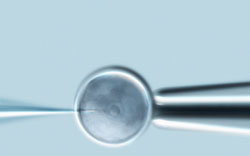
The Atomic force microscope (AFM) is a powerful instrument for determining the surface topography of biological samples such as neuron growth cones and confluent living cells. Besides providing morphological information under physiological conditions as well as during biological processes, it has opened exciting possibilities to analyse biomolecules structural and functional properties at submolecular level. Unlike traditional microscopes, AFM operates by measuring the attractive and repulsive forces in response to which the sharp tip at the end of a microscale cantilever bends as it moves over the sample surface. Conventional micro-manipulation platforms are based on relatively stationary robotic systems, ensuring high precision and repeatability. However they offer relatively low flexibility, which is required for a variety of experiments with the same manipulation set-up. Within the European research project MICRON, a cluster of fully autonomous microrobots, just a cubic centimetre in size was developed to form the basis for a flexible micro-manipulation platform. The AFM sensor was fixed at the robots' rotational actuator, a multilayer piezoelectric actuator. It permits movement in three orthogonal directions and control over the AFM tip's position in the range of nanometres. Energy supplied for the displacement of the microrobot was used to perform simultaneous manipulation tasks and tests on the mechanical properties of living cells, achieving a dramatic reduction in power consumption. Furthermore, the end of a commercially available cantilever was sharpened to an approximately 1.5 μm long needle-like protrusion. This allows the probe to examine complex biological systems in more detail than standard tips. The future research activity of the SIC (Sistemes d'Instrumentació i Comunicacions) group at the University of Barcelona will be focused on living cells in a controlled and sterilised environment. Further system development and refinement of the microrobotic system aims to develop a valuable laboratory tool for structural biology, and eventually for industrial applications.