Increasing knowledge for advanced nanomanufacturing

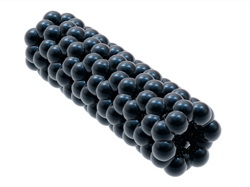
The 'Parallel nano assembling directed by short-range field forces' (Parnass) project proposed the use of specially designed nanoscale force fields for large-scale nanomanufacturing. Parnass thus conducted a range of theoretical and experimental works to enhance qualitative and quantitative understanding of these forces. This is the first step for the development of relevant technology. Project partners developed techniques for preparing a suitable substrate on which to deposit nanoparticles, and then set about acquiring qualitative knowledge of the forces acting on the nanoparticles. This knowledge was used to formulate a quantitative model for describing and predicting the behaviour of nanoparticles in response to a design's force fields. Semiconductor nanowires and single-wall carbon nanotubes were studied in detail to better understand the results of various growth techniques and for characterisation of basic structures and materials. Various Parnass experiments and investigations succeeded in answering many questions and closing gaps in knowledge. Other project activities were able to apply quantitative knowledge in realising directed self-assembly such that nanowires move to their intended positions without individual manipulation. Experimental results are promising and partners intended to continue efforts beyond the scope of the Parnass project. Continuing successes in this field have the potential to impact developments in other areas such as health care.