Advancing astrophysics through personal development


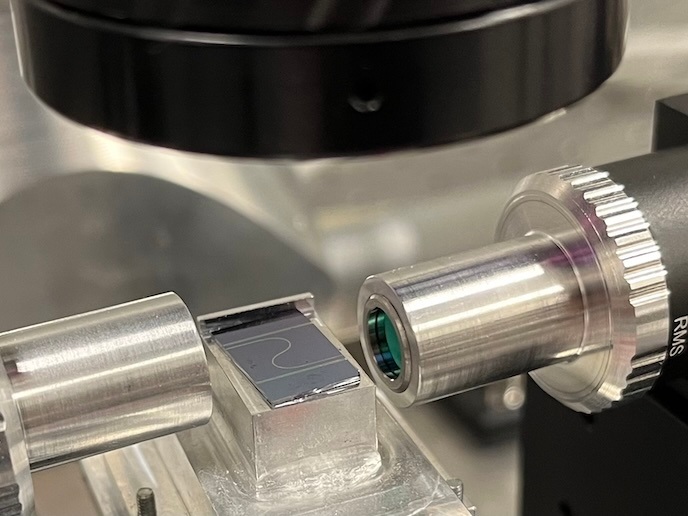
The EU-funded project 'The search for Earth-like extra-solar planets' (SELEP) centred on a fellow's career development in instrumentation in astrophysics. The goals were to expand his experience in new instrumentation domains and develop his research background in astrophysics. This also involved enhancing existing skills in practical astronomical observation. In terms of research experience, the focus was on the direct detection and spectroscopy of the atmosphere of extra-solar planets via nulling interferometry. The latter is a technique used to detect a faint light source near a bright one. As such, a major SELEP objective was to realise decisive technological advances in the radial velocity detection technique so as to open the way to discovering the first Earth-like planets. To these ends, work was conducted alongside a top-level research group dedicated to extra-solar planet detection and characterisation, which also afforded access to the most advanced radial velocity instruments. Combined, these provided a very beneficial environment for developing the fellow's competencies. The fellow was involved in the development of a new table spectral calibration source, which showed very promising performances and boasts several advantages for enhancing the calibration of existing observation systems. Modelling techniques developed for explaining and quantifying observed phenomena with improved precision enabled exploration of a new kind of optical fibre for precision radial velocity instruments. The properties of these were explored first through simulation and subsequently with a bench test developed during the project. SELEP was deemed a success, with participation in numerous instrumental developments focused on research for extra-solar planets contributing greatly to realisation of the project's objectives.