Poor quality waters for better irrigation

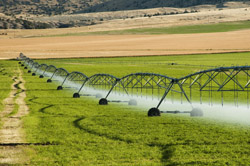
The 'Safe and high quality food production using poor quality waters and improved irrigation systems and management' (SAFIR) project employed an integrated, multidisciplinary European-level approach with a global dimension. In doing so, it investigated several different irrigation methods with the aim to devise affordable and easily applicable irrigation solutions. Through the course of the research, SAFIR designed two suitable water treatment methods – a compact pressurised membrane biofilter (MBR) and a field treatment system. These systems were designed to deal with small industrial and residential wastewaters, or secondary wastewaters from urban treatment plants or wastewater requiring further in-field treatment. Project partners addressed specific concerns such as bioaccumulation of pollutants and coverage of seasonal concentration changes. Also, the physical and chemical characteristics of food produced with the new irrigation techniques were evaluated and compared to food produced with regular water systems. Accordingly, the partial root drying (PRD) method was considered advantageous over regular deficit irrigation methods. Additionally, these methods were evaluated with respect to trace pollutants, pathogens and soil degradation. Consequently, conceptual and numerical models were developed at field-scale for chemical and biological transfers. This enabled team members to obtain feedback on potential risks and water quality of these systems for the development of a safe, affordable solution for recycled water schemes. Information regarding these treatments was disseminated to farmers along with water saving guidelines as well as risk assessment models compliant with the WHO recommended methodologies.