Making one mystery of the universe less mysterious

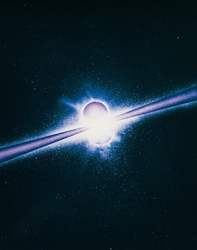
The ‘High energy neutrino astronomy with IceCube: towards the detection of neutrinos from Gamma Ray Bursts (GRBs)’ (He Neutrino IceCube) project was developed to initiate a new researcher to the IceCube collaboration and to simultaneously increase understanding of neutrino astronomy. IceCube, a massive string of photodetectors buried about 2 km under Antarctic ice at the South Pole, is the world’s largest neutrino detector. Detection of neutrinos theoretically emitted from GRBs might solve the mystery of the origin of these cosmic rays, a question that has baffled astronomers for more than a century. In this first part of the He Neutrino IceCube project, the Fellow focused on enhancing reconstruction and analysis of data obtained on the cascade channel of IceCube. Specifically, the Fellow modified software to improve separation of the signal from the noise in detection routines, given that the neutrino-induced signal is quite small compared to the cosmic-ray induced background noise. Such modifications are essential to improving IceCube’s capabilities. The EU-funded project's researchers expected to be able to exploit these enhancements to search for and hopefully detect GRB neutrinos. Advances in this area just might bring us one step closer to solving at least one of the mysteries of the universe.