A breakthrough in aquaculture assessment

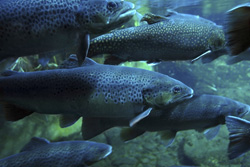
A robust aquaculture sector is based on assessing the age of fish stocks efficiently and accurately. Such assessment uses a bone in fish ears called an otolith, which reveals the age of a species but is a very costly method. The EU-funded project 'Automated fish ageing' (AFISA) proposed a more efficient and less costly system to improve age calculation and to produce better, more standardised data in laboratories. This high-tech method required developing software algorithms for fish ageing automation based on otolith features and otolith imaging. To develop approaches that estimate age automatically, AFISA analysed three large case studies. It gathered otolith data and prepared databases featuring otolith images as well as developing algorithms for acquiring images, extracting image structures and automating ageing issues. The project team worked on increasing automation within the proposed solutions and integrated them into existing software, improving age structure estimation and automated evaluation of individual ages. Once the prototype was completed, AFISA tested its accuracy and evaluated its cost effectiveness with different sample sizes of fish. In technical terms, it accomplished its assessment in comparison to the age length key (ALK) method, using the mean squared error (MSE) and relative bias (RB) as performance indicators. At the end, the project showed that complete automation was unlikely as expert involvement remained an integral part of accurate assessments. Nonetheless, AFISA has helped advance assessment of aquaculture and has brought us much closer to developing a sophisticated tool to support the industry.