Making wind turbine blades circular

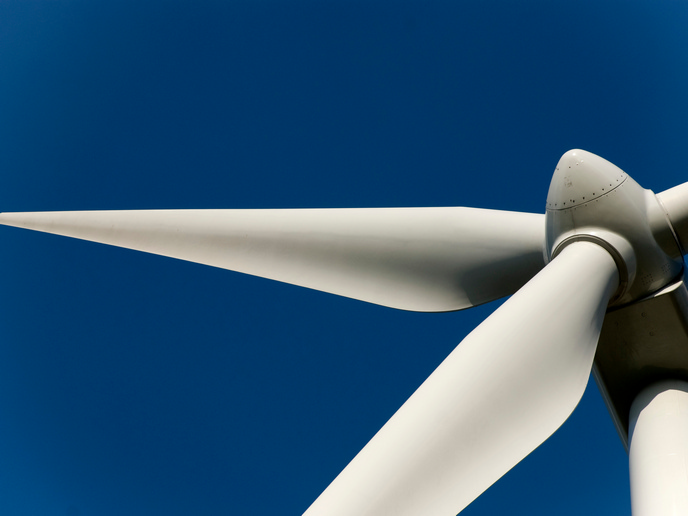
Wind energy is growing rapidly across Europe, but so is the challenge of managing decommissioned blades, which are usually incinerated or end up in landfills. Launched in 2023, the EU-funded REFRESH(opens in new window) project is transforming the life cycle of wind turbine blades by establishing a circular, smart system for recycling composite materials. In a major milestone, project partners CETMA (Italy) and Gjenkraft (Norway) collaborated with Cormatex (Italy) and ÉireComposites (Ireland) to manufacture a section of a wind turbine blade using recycled fibres recovered from end-of-life blades. This breakthrough proves that materials from decommissioned blades can be successfully transformed into new turbine components. The recycled glass fibres were processed into a non-woven mat, then incorporated into a non-structural blade prototype. “This is tangible proof that full circularity for wind energy is possible,” comments Marcin Rusin, CEO of Gjenkraft, in a recent press release(opens in new window) posted on the REFRESH website. “We have now moved from laboratory testing to a real component that demonstrates how recycled fibres can be used in new blades. It demonstrates the power of European collaboration – where technology, innovation and sustainability truly come together.”
A circular value chain
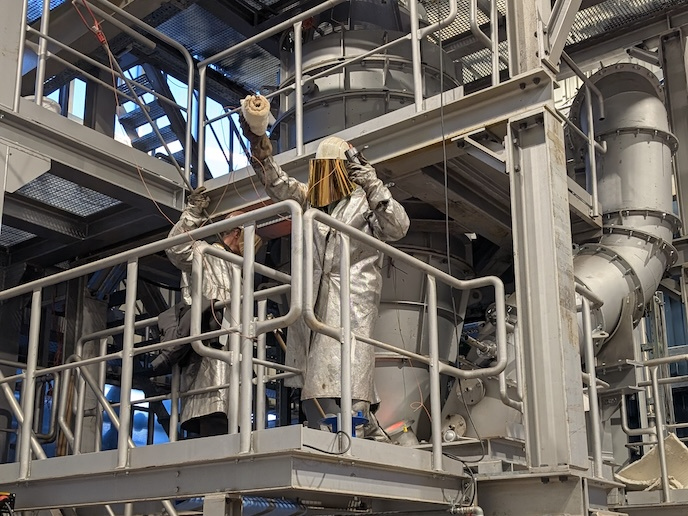
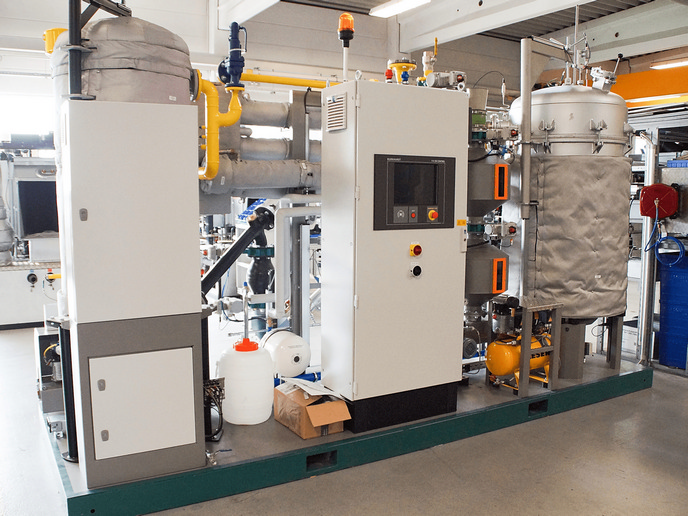
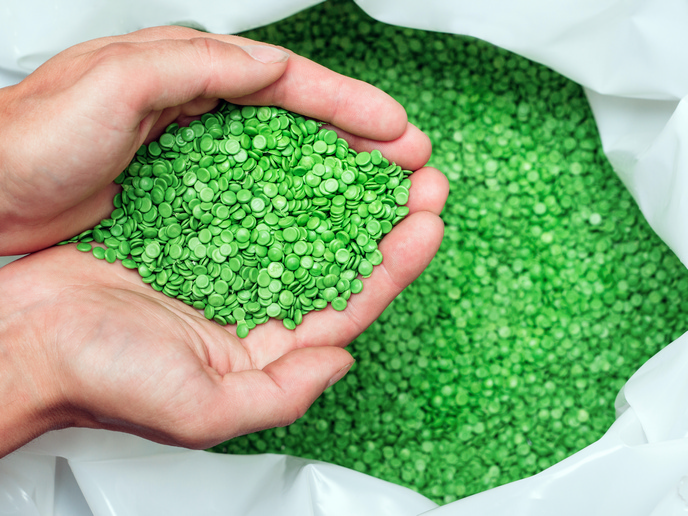
The project’s scope spans the entire manufacturing value chain. Partners include research institutes, engineering firms, waste valorisation companies and industrial sector representatives, ensuring technical innovation is matched with practical implementation. The recycled glass fibres were processed using Gjenkraft’s thermal recycling process and the non-woven mat manufactured using Cormatex’s Airlay/thermobonding technology. CETMA assessed the mat’s compatibility with vacuum infusion – a manufacturing process commonly used for large, high-strength composite parts such as boat hulls, automotive components and, of course, wind turbine blades. Tests showed that the mechanical properties of the composite laminates manufactured using recycled glass fibre were comparable to those of laminates made with commercial virgin glass fibre mats. “We are excited to see this excellent result of the REFRESH project,” states Luca Querci, Managing Director of Cormatex. “This is the confirmation that our innovative Airlay technology ‘Lap formair H’ is perfectly suitable for processing special fibres such as glass fibre and carbon fibre and that it can fruitfully contribute to recycling processes of glass fibre or carbon fibre composite materials. We look forward to the new market opportunities that this outstanding result is developing for our special technology!” To demonstrate true circularity, the REFRESH project evaluated whether the recycled glass fibre mat could be reintroduced into new wind turbine blades, replacing virgin materials in non-structural components. In collaboration with ÉireComposites, a blade tip section from a 13-metre blade was manufactured using vacuum infusion, making it possible to compare conventional glass fibre with the recycled material within the same part. This side-by-side assessment confirmed the technical feasibility of integrating recycled composites back into the wind energy sector. “We are impressed by the quality and finish of the skin section reinforced with the recycled glass fibre mat,” observes Conor Kelly, Engineering Manager of ÉireComposites. “This shows great potential to replace virgin glass fibre in non-structural wind blade components and is a step closer to making circular blades a reality.” The REFRESH (Smart dismantling, sorting and REcycling of glass Fibre REinforced composite from wind power Sector through Holistic approach) project will present its findings at the JEC World 2026(opens in new window) trade show being held in Paris from 10 to 12 March. For more information, please see: REFRESH project website(opens in new window)