Leveraging AI for more reliable predictions of immunotherapy in lung cancer


A recent study(opens in new window) has shown that AI tools can assist physicians in predicting treatment and survival outcomes in patients with advanced non-small cell lung cancer (NSCLC) treated with immunotherapy. The study is part of the EU-funded I3LUNG(opens in new window) project, whose goal is not having AI replace clinical expertise but rather making it a useful partner in clinical decision-making.
Better tools needed
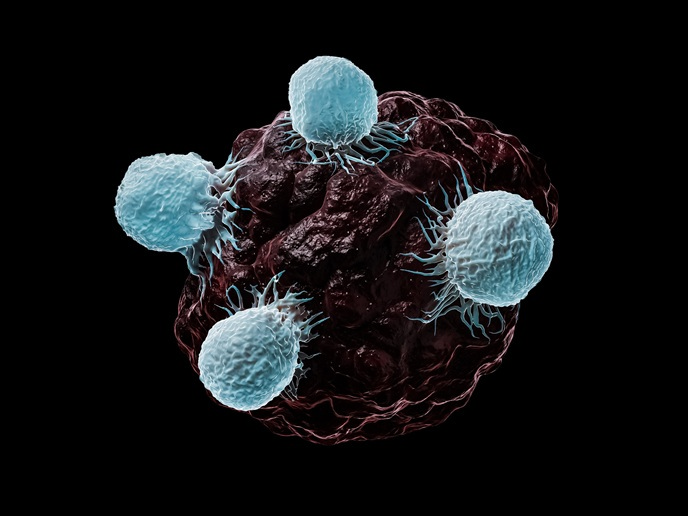
Immunotherapy, a treatment using the body’s immune system to fight cancer, has transformed NSCLC care, achieving long-term benefits in up to 30 % of patients. However, the fact remains that most patients neither improve nor go into remission after immunotherapy. This highlights the need for robust biomarkers to provide reliable information on each patient’s individual cancer – its genetic makeup, behaviour and how it interacts with the immune system. By identifying patients not likely to show a meaningful positive reaction to immunotherapy, doctors could safeguard them against unnecessary side effects and costs. Today, treatment decisions rely mostly on PD-L1, the only clinically approved biomarker, despite its limited predictive power. The study – likely the largest international, real-world, multimodal study of its kind – integrated clinical, blood, imaging, pathology and genomic data with machine learning and deep learning models. The aim was to investigate whether AI can help predict outcomes for patients with advanced NSCLC receiving immunotherapy. The 2 396 patients participating in the study were recruited from six centres in Germany, Greece, Israel, Italy, Spain and the United States. According to the findings, the AI models consistently outperformed all standard clinical biomarkers. The area under the curve (AUC) – a machine learning metric used, in this case, to compare how accurately different models predict survival outcomes – ranged from 0.77 for the model using clinical and blood data to 0.88 for the model that additionally incorporated imaging and digital pathology. AUC scores between 0.8 and 0.9 are generally regarded as “excellent”.
Not only experts
The study also evaluated human-AI collaboration by having 20 physicians – 10 lung cancer specialists and 10 from other fields – review 100 real patient cases, first without and then with AI assistance. Access to the AI tool improved sensitivity for identifying patients likely to respond to treatment, raising the AUC from 0.72 to 0.87. While both experts and non-experts benefited from AI use, non-specialist physicians demonstrated the most substantial gains. This finding is particularly relevant for community oncology settings where thoracic expertise is often limited. “I3LUNG establishes a new benchmark for AI in thoracic oncology. Decision support tools built even from routinely available clinical data can outperform the biomarkers we rely on today,” states thoracic oncologist Marina Garassino, Professor of Medicine at I3LUNG project partner The University of Chicago, in a ‘UChicago Medicine’ news item(opens in new window). “For patients, this means fewer missed opportunities for treatment benefit. For community physicians, it means access to expert-level guidance at the point of care. For the field, it provides a rigorous, fair, and explainable framework – validated across diverse healthcare systems and populations – that can serve as a global platform for the next generation of precision immunotherapy.” I3LUNG (Integrative science, Intelligent data platform for Individualized LUNG cancer care with Immunotherapy) is now enrolling over 2 000 patients from the same six centres in a prospective study. This will enable researchers to concentrate on optimising treatment strategies. For more information, please see: I3LUNG project website(opens in new window)