Predicting cancer patient response to immunotherapy

Immunotherapy is a type of cancer treatment that uses the body’s own immune system to fight disease. By selectively stimulating the inflammatory action of certain immune cells, the body is better able to attack cancer cells. Today, more than 50 % of treatments for solid tumours include some form of immunotherapy. A key challenge however is the fact that not every patient responds well to immunotherapy. For some in fact, the side effects will outweigh any treatment benefits. The difficulty for doctors is knowing which patients will respond positively, and which will not. “Immunotherapy doesn’t work for all patients in the same way,” explains ROUTINE(opens in new window) project coordinator John Groten from PamGene(opens in new window) in the Netherlands. “What’s more, this is a costly therapy for healthcare providers.”
Relevant biomarkers from blood samples
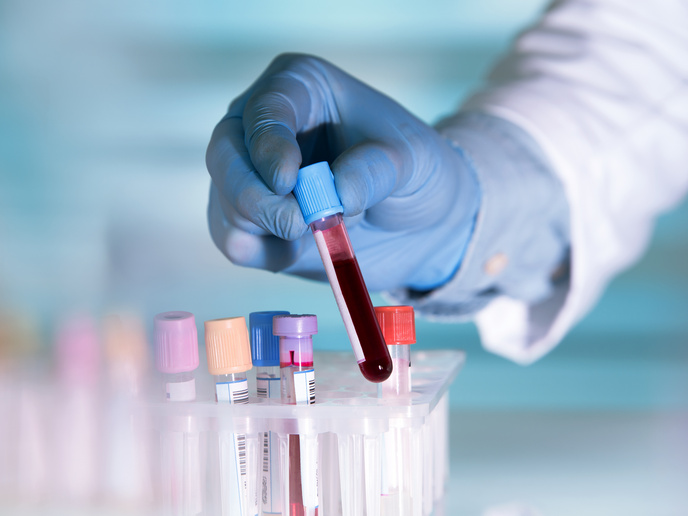
One solution to this would be to identify suitable biomarkers in the patient to better monitor treatment outcome. PamGene has been working on such a technique, which profiles specific immune cells to predict a patient’s response to immune checkpoint inhibitors (ICIs). All that is needed is a simple blood sample before treatment begins. The idea is that this technique would help doctors to identify patients that would respond well to this course of immunotherapy, and patients that would not. Such an approach would improve patient outcomes and avoid unwanted side effects. “We registered two diagnostic products in 2023, for lung and skin cancer,” says Groten. “But this is where the real work began for implementation in the EU.”
Intensive validation and clinical studies
The EU-funded ROUTINE project was launched to help PamGene bring their innovation into clinical settings. EU support was needed to push these innovations through intensive validation and clinical studies, along with health effect monitoring and cost analysis. While this work was necessary in order to move towards commercialisation, such in vitro diagnostic (IVD) procedures can be very challenging and time-consuming for SMEs. “This is really where ROUTINE came in,” notes Groten. “The project helped to get studies off the ground, which can be very expensive and country-specific.” PamGene also enlisted expertise to help the company navigate the complex regulatory environment in Europe. “This enabled us to go one step further with our innovations,” remarks Groten.
Moving towards personalisation in medicine
By improving response prediction, PamGene’s innovation aims to enhance the targeted use of ICIs across all cancer stages. This has the potential to improve patient care and comfort, and save healthcare services money. “This is about equipping doctors with the tools to make decisions,” says Groten. “We also think our innovations are in line with new approaches to assess healthcare benefits. There is growing recognition that while immunotherapy can help enormously, it is not a miracle cure. We have to look at patient care case by case.” In this way, the ROUTINE project is very much in line with the move towards personalisation in medicine. This means thinking about side effects, dosages and what the best course of treatment for each individual patient is. “We are currently expanding the commercialisation phase in key countries in the EU and building up our IVD regulatory expertise,” adds Groten. “We are also interested in ultimately looking for biomarkers that could cover many cancers all at once.”