Preventing cancer hijack of the immune system

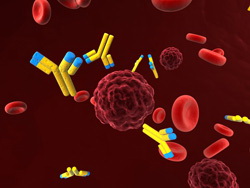
A common feature of cancer is its ability to evade, or even avoid, immune system defences. Even more serious is the phenomenon whereby the presence of cancer actually hijacks the patient's immune system which results in the promotion of tumour growth. The macrophage, a member of the body's innate defences, is a common target for the cancer in an attempt to defend itself against the ravages of the immune system. Macrophage production of cytokines and growth factors block the naturally occurring response against the tumour cells. The EU-funded project 'The role of prostaglandin D2 in cancer-associated inflammation' (PGD2CRI) aimed to identify the signalling pathways triggered by contact with cancer cells. Exactly how the cascade chemicals promote cancer development could then be unravelled. Project scientists concocted a 'conditioned medium' (CM) by incubating macrophages from ovarian cells in a culture medium. The CM induced changes inside the macrophages that made them more susceptible to pro-tumour polarisation while blocking the anti-tumour activity of the cells. On analysis of the changes, the team found that loss of cholesterol in the cell membrane led to a reduction in so-called lipid rafts. Loss of specific micro-domains on the cell membrane could affect signalling with a corresponding increase in pro-tumour activities. Lipid rafts are also depleted in tumour-associated macrophages (TAMs). Also found to play a part is the P13K signalling pathway which is key in the development of prostate cancer. Experimental data indicates that P13K activity in immune cells is necessary for the effects of CM on macrophages. Moreover, P13K in the immune cells is required for their tumour-promoting function. The bonus is that P13K inhibition could be beneficial for cancer treatment by increasing the number of anti-tumour macrophages. Knowledge of molecular cascades and cross-talk is a very potent research avenue for the battle against cancer. The PGD2CRI project has successfully shed light on the delicate balance between cancer cells and status of the immune system.