Kepler and 150 000 stars' cosmological melody

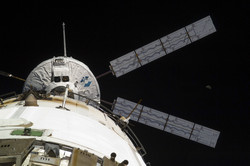
In 2009, the National Aeronautics and Space Administration (NASA) launched Kepler with the primary mission of finding Earth-like planets outside our solar system, alien worlds orbiting distant stars. Since then, the space telescope's photometer has provided data of such a high quality that the view of how stars work has changed. At the Harvard-Smithsonian Centre for Astrophysics (CfA), scientists from around the world have been working on the analysis of Kepler's data for more than 150 000 stars. The EU-funded SAS-RRL (Space asteroseismology & RR Lyrae stars) project was initiated to study a class of pulsating stars used to measure cosmological distances. The RR Lyrae star, the first member of the class, has been studied for more than 100 years. Its brightness oscillates with a period of about 13.5 hours. During each period, smaller cyclic changes occur. SAS-RRL scientists found that this behaviour, known as the Blazhko effect, is a rule rather than an exception in RR Lyrae stars. Project scientists also found signs of the RR Lyrae star's period doubling in data from the French-led Convection, Rotation and planetary Transits (COROT) mission. The stars' light curves were analysed with standard Fourier techniques to follow the time evolution of brightness oscillations. The varying periods suggest that brightness oscillations result from a complicated interplay of radial and non-radial pulsations of the stars' surfaces. The omnipresence of small and frequent oscillations in all types of RR Lyrae stars opened the way to using their brightness for the study of their internal structure. Stars' internal structures can be probed with asteroseismology because oscillations of different frequencies penetrate to different depths. The next step is to exploit the scientific potential of these observations and estimate the stars' masses and ages to test stellar evolution theory. For this purpose, the scientists analysed X-ray observations from NASA's Chandra X-ray Observatory (CXO) to derive constraints on stars' properties. The findings have been published in renowned peer-reviewed journals and presented at international conferences, raising the visibility of SAS-RRL project research within the scientific community. Discovering planets around stars light-years away is a relatively new science, but the SAS-RRL project has proven that the light sent off can help scientists in their hunt for life in the depths of our Universe.