


ERC grantee awarded prestigious Fields Medal
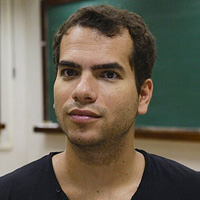
The Fields Medal, which is regarded by many as the Nobel Prize for mathematicians, was awarded to Dr Avila along with three other mathematicians: Manjul Bhargava, Martin Hairer and Maryam Mirzakhani. The opening ceremony of the International Congress of Mathematicians (ICM) in Seoul on Wednesday 13 August. Maryam Mirzakhani made history by being the first woman ever to receive the medal in its almost 80 year history. The medal is another addition to Dr Avila’s long list of accolades including the Early Career Award; the Michael Brin Prize and the Herbrand Prize. Currently working as Professor at Instituto Nacional de Matemática Pura e Aplicada (IMPA) in Brazil and senior researcher at Centre National de la Recherche Scientifique (CNRS) in Paris, Dr Avila is said to have ‘changed the face of his field’ using the powerful idea of renormalisation as a unifying principle. With the ERC-funded QUASIPERIODIC project, which began in 2010, Dr Avila and his team focus on the study of two distinct classes of dynamical systems which display a quasiperiodic component. Organisers of the Fields Medal particularly praised his collaborative approach, naming it as ‘an inspiration for a new generation of mathematicians’. Alongside Dr Avila, Maryam Mirzakhani was also one of the four mathematicians and the first woman to be recognised with a Fields Medal. Professor Mirzakhani was honoured for her outstanding contributions to the dynamics and geometry of Riemann surfaces and their moduli spaces. Organisers praised her work for being ‘striking and highly original’. They added, ‘[Mirzakhani] embodies a rare combination of superb technical ability, bold ambition, far-reaching vision, and deep curiosity.’ Manjul Bhargava from Canada was also awarded for developing powerful new methods in the geometry of numbers, which he applied to count rings of small rank and to bound the average rank of elliptic curves. Professor Bhargava was named as ‘a mathematician of extraordinary creativity’ with a taste for simple problems of timeless beauty, which he has solved by developing elegant and powerful new methods that offer deep insights. Finally, Austrian mathematician Martin Hairer was recognised for his ‘outstanding contributions’ to the theory of stochastic partial differential equations, and in particular for the creation of a theory of regularity structures for such equations. Organisers said that his work has provided tools for attacking problems that up to now had seemed impenetrable. They praised his ‘commanding technical mastery’ and ‘deep intuition about physical systems’. The Fields Medal is awarded once every four years by the International Mathematical Union to exceptional talents under the age of 40. It recognises outstanding mathematical achievement for existing work and the promise of future achievement. Between two and four prizes are announced each time.For more information, please visit: http://www.mathunion.org/general/prizes/2014/(opens in new window)
Countries
South Korea