


Trending science: Lima climate talks – we’re on track but ‘critical issues’ remain
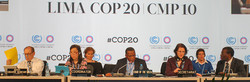
As another year draws to a close, so too has another session of the annual UN international climate negotiations. Held in Lima, this year’s lengthy rounds of negotiations involving over 190 countries ran over time but eventually wrapped up on Sunday. The headline takeaway is a roadmap for the establishment of an international climate treaty in Paris next year. The UN claims that Lima has set us ‘on track’ by elaborating on the elements of next year’s agreement and establishing the ground rules for how countries can submit contributions to the new agreement during the first quarter of next year. It also points to the significant progress made in ‘elevating adaptation onto the same level as action to cut and curb emissions’. Miguel Arias Cañete, EU Commissioner for Climate Action and Energy, cautiously echoed UN sentiments, noting, ‘The EU came to Lima to lay the ground for negotiations in Paris. Now, we are on the way to Paris. And although the EU wanted a more ambitious outcome from Lima, we believe that we are on track to agree a global deal in Paris next year.’ Commissioner Cañete cited the EU’s ambitious 2030 climate and energy package as proof of the bloc’s commitment to the issue. However, other commentators point to the gaps in the road map and the thorny issues not yet settled. Nature notes that among the ‘critical issues’ omitted and to be settled next year are ‘the structure of the eventual treaty, financial aid to help poor countries reduce greenhouse gas emissions and how to distribute the burden between developed and developing countries’. National Geographic, meanwhile, reports that the roadmap is ‘a compromise that leaves no one overjoyed but most happy that at least something was accomplished’. According to Nature, opposition from China and others led negotiators to abandon language that would have established formal reviews for climate pledges. It adds, ‘They also dropped a proposed requirement that countries include additional technical data that would have made evaluating those pledges easier.’ This decision has been criticised by environmentalists and some scientists. Nature points to the crucial importance of independent assessments, particularly in light of the recently-published scientific review which suggests that Australia is unlikely to meet the pledge it made at the 2009 climate summit in Copenhagen: ‘The country committed to cut emissions to 5 % below 2000 levels by 2020, but it is instead on track for a 26 % increase, according to an analysis by Climate Action Tracker, a consortium of scientific organizations based in Berlin, Germany’. Another one of the big unanswered questions from Lima is whether the treaty will be legally binding or allow a more voluntary approach. According to National Geographic, the latest draft seems to lean toward the latter, by asking countries to propose their own cuts in emissions. It adds, ‘Although a more voluntary approach is not favored by many environmentalists and developing nations, the U.S. China, and other developed countries have been saying it may be the only workable plan’. The agreed draft will continue to evolve over the course of 2015 until December when all eyes will be on COP 21 in Paris where our leaders will meet with the aim of finalising a new treaty to address climate change post 2020. For further information, please visit: http://unfccc.int/meetings/lima_dec_2014/meeting/8141.php(opens in new window) Photo by IISD/ENB(opens in new window)
Countries
Peru