Testing invasion mechanisms in Galapagos

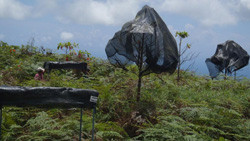
Many invasive species are adversely affecting native species and change ecosystems functioning. Cutting-edge experiments are therefore required to determine and mitigate the impacts resulting from invasive species. This challenge was met by EU ecologists who studied the red quinine tree (Cinchona pubescens) and its successful invasion in the Galapagos Islands. The treeless highlands of the island of Santa Cruz in the Galapagos archipelago are being transformed into forest-like habitats following the introduction of Cinchona. The project 'Testing mechanisms of species invasion in Galapagos: Role of resource competition and species traits' (TEMSPIG) investigated ecosystem changes following the tree's introduction and the role of mycorrhizal fungi (MF) in the invasion process. Studies indicated that the air temperature and light intensity were lower and air and soil humidity higher under Cinchona trees which resulted in microclimate in the surrounding area. The removal of shade created by Cinchona resulted in the regeneration of native plant species. Researchers also tested whether Cinchona altered nutrient cycling in the soil. They found higher leaf nutrient concentrations and faster decomposition rates than for native species. In addition, old Cinchona leaves contained significantly higher levels of phosphorous than green leaves. These results suggest a faster decomposition of litter and an increased nutrient availability in Cinchona-infested areas. This could promote the growth of Cinchona and other introduced species, whilst further impacting native species in the Santa Cruz highlands. Scientists also investigated the role of MF in the uptake of phosphorous by Cinchona and compared Cinchona roots from the Galapagos with roots from the tree's home range in Loja, Ecuador. Results showed a higher degree of mycorrhization in the Galapagos samples, plus a stronger response to nutrients. The TEMSPIG project enabled researchers to learn techniques in experimental and molecular biology. These were used to test hypotheses about the impacts of Cinchona on the native vegetation of the Galapagos highlands and the role of MF in facilitating this species invasion. Data from TEMSPIG also contributed to a management plan for improving control techniques for introduced species.