Advancing biomed applications

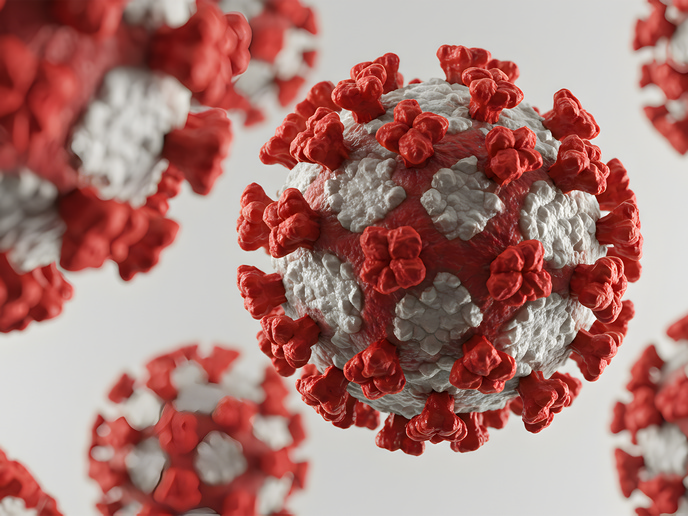
Current encapsulation systems such as droplets, liposomes or polymersomes produce structures with sizes ranging from tens of nanometres to a few hundred micrometres. Natural capsids, cage-like protein structures developed by some viruses, present an important alternative for compartmentalisation. Certain proteins also have internal pores of well-defined shape and symmetry that can be used as nanocompartments. Directed mutagenesis allows controlling the properties of the individual protein and/or the structure of the resulting capsid. Altering the charge of amino acids, or 'supercharging' the protein, confers new surface properties to it while maintaining protein functionality. One of the important features of supercharged proteins is their enhanced thermal stability. The project 'Engineering of an artificial capsidic enzyme for aqueous dirhodium catalysis' (ACCARC) was dedicated to the engineering of ferritin to become a functional nanocompartment. Ferritin is a globular protein complex with symmetrical internal cavities serving as iron storage in both prokaryotes and eukaryotes. Using computational design, the outside surface of ferritin was reengineered to produce a supercharged nanocage carrying the positive charge. The resulting supercharged ferritin was thermostable and could bind efficiently to negatively charged surfaces. Scientists used the engineered ferritin nanocage to synthesise iron-oxide nanoparticles. This enabled monitoring of the spatial localisation of the nanocages in transfection experiments. It was found that supercharged ferritin is readily incorporated into cells of a human cancer cell model. Next, supercharged ferritin was assembled inside a larger redesigned protein nanocage, AaLS-13. AaLS-13 is mutant of Aquifex aeolicus lumazine synthase, a capsid-forming enzyme engineered to have negative charge to carry positively charged protein cargo. By tuning the electrostatic interactions between supercharged ferritin and AaLS-13, the scientists obtained nested structures. These Matryoshka-type structures contained several iron-loaded, supercharged ferritin nanocages encapsulated within the larger cage. The project opened up new possibilities towards construction of nano-sized structures such as artificial organelles or microcompartments.