


2020 vision unveiled at Aerodays 2001
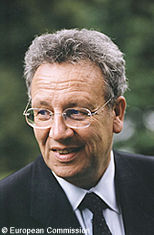
One of the major thrusts of a new strategy paper on the European aeronautics industry is that research is the key to its future competitiveness, European Research Commissioner, Philippe Busquin told the Aeroday's 2001 event in Hamburg on 29 January. The paper has been worked on by a group of key figures from the private and public sectors, academia and researchers, presided over by Commissioner Busquin. 'If Europe wants to stay a global player in the aeronautics world, it cannot afford to fragment its research effort or to waste resources through duplication or lack of coordination,' said Mr Busquin. He pointed out that the proposed European Research Area (ERA) and the forthcoming Framework programme could assist in helping achieve this goal. The need for a focused approach to the sector is enhanced by figures showing that air traffic volume will triple by 2020, along with proposed new generations of aircraft coming into operation to cater to environment and safety concerns. It is not simply the airlines that will be affected but also other areas such as air traffic control systems and aeronautics suppliers. The set aims of the paper are - a five fold reduction in accidents - halving perceived aircraft noise - a 50 per cent cut in carbon dioxide emissions per passenger kilmometre (halving fuel consumption) - 80 per cent cut in nitrogen oxide emissions - an air traffic system capable of handling 16 million flights a year with 24 hour operation of airports and more comfort for passengers The report follows up these aims with two recommendations - the creation of an advisory council for aeronautucs research in Europe and - the use of different forms of cooperation, in particular between national programmes and the European union, as well as transnational partnerships in the best possible way to achieve the set goals. The advisory council should be established by the middle of this year.