


Busquin calls for 'unequivocal' ethical guidelines for EU-funded research
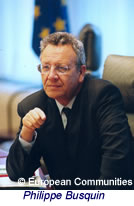
Research Commissioner Philippe Busquin emphasised the need for 'unequivocal' ethical guidelines in areas such as human cloning during a discussion of ethical issues relating to the Sixth RTD Framework programme (FP6) with the European group on ethics in science and technologies (EGE) on 2 October. The debate focused on the question of how to accommodate the divergent ethical stances of Member States, for example in medicine or biology, within international European research projects such as integrated projects and networks of excellence. Commissioner Busquin said: 'It is not our intention to try and harmonise ethical rules in such fields. However, there are issues where we must have unequivocal rules for the scientists applying for EU funding. One case in point is human reproductive cloning, where I fully support the Franco-German initiative for a world wide prohibition.' EGE president Noëlle Lenoir said that shared European values are of fundamental importance in areas such as human life and dignity, freedom of research and access to scientific knowledge, while emphasising the value of differing viewpoints. 'Pluralism mirrors the richness of Europe and its traditions and increases the need for mutual respect and tolerance. The respect for different philosophical, moral or legal approaches is part of the ethical dimension of building a democratic European society,' she said. The EGE is currently contributing to a Commission action plan on 'science and society' which is due to be published later this year. The group has proposed, among other actions, the development of a European information system on legal and ethical issues, a network of Member States' national ethics councils, the fostering of public debate in Member States and candidate countries, and measures to improve researcher training in ethical issues. It was agreed that dialogue between the Research DG and the EGE must be reinforced in order to assess the ethical impact of future scientific developments and build trust between science and society. The EGE has also welcomed a Commission proposal to strengthen European funding of ethics in science and technologies.