


Liikanen announces plans to facilitate public sector information access
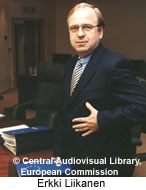
The European Commission adopted a communication on 23 October aimed at making the public sector more accessible for both citizens and businesses within the EU and introducing a directive on the subject by next winter. Public sector information includes financial and business information, legal and administrative data and geographical information relating to tourism and transport, said EU Commissioner for Information Society and Enterprise, Erkki Liikanen, speaking on 24 October. Mr Liikanen emphasised that easy access to such information across the EU will benefit both citizens and businesses. 'In the first place, public sector information is important for European citizens. It will facilitate their interaction with the administration, will allow them to keep informed on recent developments, and has the potential to increase their participation in the democratic process,' he said. On the benefits for business, Mr Liikanen emphasised that 'the European content industries can re-use public sector information to make added value information products and services.' This would apply particularly to those businesses wishing to operate in a cross border environment. Content is also a priority for the Commissioner. 'We too often talk about technology and infrastructure. Who cares about technology?' he said. 'People are interested in service.' 'One of the keys to making Internet content more attractive is to provide for all languages', Mr Liikanen stressed. 'If there is no content in your own language, it's not something you need,' he said. 'Internet in English is only Internet for a few.' A tailored approach, personalisation and localisation is what is needed to make the Internet more attractive, said the Commissioner. Mr Liikanen is aware that the harmonisation of accessibility to public sector information is not an easy task. In each of the 15 Member States, different rules apply to using public information along with varying prices for such use. Public information is also an area which has remained within the competencies of the Member States. This is an area where Europe differs widely from the USA, where the freedom of information act allows everyone access to public sector information, fees are limited, there is no government copyright and no restrictions on the exploitation and reuse of information. These different systems mean that the US market is up to five times larger than the European market, said Mr Liikanen, leaving Europe at a clear competitive disadvantage. 'I am not proposing a US model where all is free,' said Mr Liikanen. He is however calling for a common position in three areas: a general right to reuse accessible information, a ban on exclusive arrangements and reasonable and transparent prices. The Commissioner admitted that this is likely to be a difficult task, as the Commission must first convince national governments and stakeholders that the proposal would be advantageous. The EU candidate countries will not be left out of any moves in this area, Mr Liikanen told CORDIS News. All proposals will be presented to these countries. When discussing the information society, the most enthusiastic reaction is always from the candidate countries, Mr Liikanen told CORDIS News, adding that they see it as a way of leapfrogging forward. Ending on a confident note, he claimed that 'there will be lots of discussions and lots of agreement'.