


De Donnea confident of agreement at next Research council
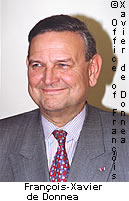
The present chair of the Research council, François-Xavier de Donnea, has told CORDIS News that he is confident that the next meeting of the Research council on 10 December will bring together the final strands needed for agreement on the details of the next Framework programme. 'What we need to avoid is a hiatus between this Framework programme [FP5] and the next one, as happened between the Fourth and the Fifth Framework programmes,' he said. He added that, although he recognised that there had been some reservations expressed by certain Member States at the 30 October Research council, the positions were not so far apart overall. 'I was pleasantly surprised that we could reach agreement on some of these issues,' he said. Although the figures indicate that, generally, proposals received backing of a large majority of countries with the remainder less favourable, this does not pose a major obstacle, according to Mr de Donnea. 'Remember that it was not always the same countries that were against in each topic. It was a change of countries, but the percentages were similar. And with the ten countries who agreed the budget, it was not as if the other five said that they did not agree - their final agreement depends on the content.' Despite the 600 amendments tabled by Parliament and lack of definitive agreement between the Member States, Mr de Donnea is upbeat about the procedure. 'We have to be very ambitious with European research policy. The role of the President is compromise. It is very delicate because I have to find a solution acceptable to the 15 [Member States] plus the Commission - and remember that it is a process of co-decision with the Parliament.' Two factors have helped Mr de Donnea rise to this challenge - his tour of the Member States and his political experience. 'The most important period was my tour of the 15 Member States. This makes you a go-between, not only between the countries, but also between the Commission and the Parliament. I could not have reached political agreement without this contact.' Mr de Donnea also drew on his experience as a former Member of the European Parliament, as well as politician on the Belgian national scene. There was consensus on a number of key issues reached on 30 October. For example, that genomic research should be based in the first instance on human health issues, that there should be financing to improve access to and networking of research infrastructures, that there should be further research on the potential of nuclear reactors which produce less waste and that sectoral committees will oversee the application of the thematic priorities. Mr de Donnea also emphasised that some of the preconceptions of the differences are false. For example, it is generally perceived that most of the concern towards the use of new instruments (such as integrated projects, networks of excellence and Article 169, which allow countries to link up their national research programmes and projects), comes from the smaller countries. 'This is not so,' says de Donnea. 'There is general concern that this may make things difficult for smaller structures, not countries. So this is a general worry of all countries that have small, high quality structures, and it was even mentioned by Germany.' The main aim is to ensure that research in Europe be more focused and that it gives added value, according to de Donnea. 'We can do this by avoiding having an extended shopping list of research priorities...and getting added value from networks of excellence and integrated projects,' he said.
Countries
Belgium