


Presidency conference confirms economic importance of business incubators
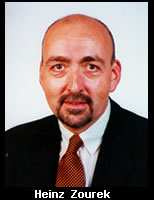
The deputy director-general of the European Commission's Enterprise DG, Heinz Zourek, has said that the role of business incubators is a growth area and a crucial boost to start-ups in a time of impending world recession. Speaking at a joint Commission-Belgian Presidency conference on 'Business centres: actors for economic and social development and urban renewal' in Brussels on 15 November, Mr Zourek said that the role of business incubators is becoming increasingly important as 'especially now when the world economy is on the edge of recession, every instrument to make start-ups successful is helpful.' Mr Zourek pointed to three key factors in the success of business incubators: networking with business support organisations, local and regional authorities and other incubator participants; well-trained business incubator staff; and the 'clustering' of start-ups so they can form connections with other and larger companies to get a better start. He added that business incubators are a growth area in Europe, with more than 850 organisations now operating throughout the continent, creating around 28,000 jobs each year. In answer to the question of whether using public money to support the creation of enterprises is a waste or a good investment, Mr Zourek affirmed his belief in the cost effectiveness of using public funds in this way, explaining that only 4,000 euro of public money is needed to create a new job through business incubators, much less than the cost of using other methods. Eric Tomas, Minister for employment and economy for the Brussels-Capital region, also affirmed his belief in the role of business centres in driving the local and regional economy. He said the centres give 'added value' for everyone by helping to create jobs and wealth for all. He added that the centres are important on several levels, from the 'local' to the 'global.' Mr Tomas also said that 'the knowledge society is not the only avenue to explore,' and it is important to develop strategies at both a European and local level which take account the economic plurality of different regions rather than concentrating only on cutting edge areas such as high technology. Mr Tomas added that networking, without which business centres would be 'doomed to failure,' is the key to their success. He said networking increases efficiency by cutting out the risk of duplication, creating communal platforms and sharing resources. The conference's 'Best practice show' also highlighted the key role which networking plays in the success of business centres in urban areas. David Peebles from The Custard Factory arts and media business centre in Birmingham, UK, said that the centre 'provides two basic needs - hope and community.' He said the initiative has led to a 'working community of small enterprises' where people come together to create a hotbed of 'commercial fertility.' Dominique Delzenne of the Tourcoing business centre of France's Régie départementale des ruches d'entreprises also highlighted the role of the business centre 'community' in fostering innovation. He said that tenants help and support each other at the centre. Philippe Chèvremont from the Héraclès centre in Charleroi, Belgium, also said that networking and interdependence have been key factors in the success of the centre, which has a 'network of partners and experts' who can be called on to provide support. Maravillas Rojo of the Barcelona Activa centre in Spain also affirmed the importance of networking in their success. Ms Rojo pointed to a 'virtual community' created through the Internet which the centre has developed, and said that links with major companies, other business centre participants, universities, schools and other start-up companies are all crucial to entrepreneurial success at the centre. Torsten Wischnewski of Pfefferwerk Stiftung, East Berlin, Germany, put their success down to the use of cooperation and the transfer of resources and experience to meet regional needs. Maurizio Grandi of la Fucina business centre in Milan, Italy said the success of the centre lies in the selection of quality staff, focus on a select number of strategic operative areas and services and on marketing and communication, and a willingness to take risks. A continuous learning process which feeds innovation at the centre is the key according to Oli Niemi from the Tampere Technology Centre in Finland, while Councillor Albert Bore, presenting the Aston Triangle business and innovation centre in Birmingham, the UK, put the success of the centre down to its strong links with higher education establishments, universities and research associations both within and outside the city.