


Commission funded project aims to improve food safety
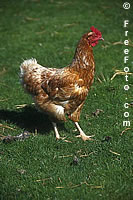
The European Commission's Research DG has awarded over 560,000 euro to a two-year European research project on selenium supplements and arsenic in food, being carried out under the Growth programme's 'measurement and testing research' subsection. The project, which will involve 20 laboratories across Europe, will be led by Professor Les Ebdon, Professor of analytical chemistry and vice-chancellor at the University of Plymouth, UK. It aims to provide a benchmark for the monitoring of selenium content in dietary supplements through the development of a form of yeast containing the element which can be used as a 'standard' for the measurements. 'Our aim is to produce a reference material that enables laboratories to check the claims and efficacy of products in the growing so-called 'nutraceutical' market place of dietary supplements,' explained Professor Ebdon. 'Without this reference material, harmful supplements could be on chemists' shelves alongside beneficial ones.' A reduction of certain forms of dietary selenium which may help to protect against prostate cancer is thought to lie behind the growing incidence of the disease in Europe. Professor Ebdon added that 'if, as expected, the clinical trials of these supplements show a way to reduce the incidence of prostate cancer, they will be of enormous interest.' The study will also examine arsenic levels in chicken, rice, fish and soil. The laboratories taking part in the study will measure the level and forms of arsenic present in these substances in order to provide a common standard for food safety checks. 'Our previous research shows that harmless chemical form of arsenic is present in fish,' Professor Ebdon explained. 'In recent years fish-meal has been added to the diet of many animals, especially chickens, and we need to be able to monitor that it is present only in the harmless forms.' The project is scheduled to end in February 2003.