


ESA technology revises solar system theory
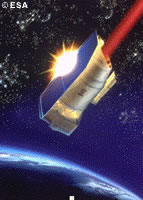
A discovery made by an international team of astronomers using the European space agency (ESA) Infrared space observatory (ISO) has challenged accepted theories on the formation of the solar system. The solar system was formed from material left over from the formation of the Sun itself. Around 5,000 million years ago, 'clumps' of this material swirling around the newborn Sun grew and formed into planets. In several of these planets, carbonates - minerals which include limestone and marble on Earth - have been found. Scientists previously thought that these carbonates could only form in liquid water, which is only found on large, planet-like bodies. But using ISO, the team of astronomers found large quantities of carbonates around two dying stars. The find breaks the association between these minerals and liquid water, as the material from the stars has neither condensed to form new planets and is not residual matter from a pre-existing planetary system destroyed by the dying stars. The carbonates around the stars must therefore have formed without the involvement of liquid water. 'Our finding suggests that not all carbonates found in the solar system were formed in association with liquid water, and this of course sheds new light on the formation history of the solar system,' explained Ciska Kemper of the University of Amsterdam, one of the astronomers involved in the project.