


German Secretary of State urges strong participation in FP6 by compatriots
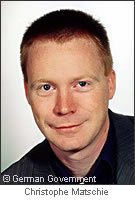
Germany's Parliamentary Secretary of State from the Ministry of Education and Research, Christoph Matschie, has called on German researchers to ensure strong German participation in the Sixth Framework Programme (FP6), and called on Member States to ensure the optimal conditions for research and innovation at home. Speaking at an information seminar on FP6 in Hanover, Germany on 3 February, Mr Matschie was optimistic about German participation in FP6, noting that 15 per cent of all expressions of interest submitted in the summer came from German research teams. He called on his country's researchers to ensure that interest in the actual programme is equally high. He referred to FP6 as a 'motor' for economic and social innovation. 'Use this platform, make the framework programme into your own. Go to Brussels. Ensure strong German participation with first class project proposals. European research is worth national researchers coming together and taking up new challenges,' he said. Mr Matschie praised EU Research Commissioner Philippe Busquin for raising public awareness of research through the European Research Area concept and the EU-wide goal of raising research expenditure to three per cent of GDP. On the three per cent target, Mr Matschie promised that 'we will not now, in these difficult times for public money, lose sight of this.' He also highlighted the progress that Germany has made in this area, raising its research spending to 2.5 per cent of GDP, two thirds of which comes from the private sector. Mr Matschie called on other EU countries to place a similar emphasis on research. 'Only when everyone makes research a priority in their own country will we succeed in doing this in Europe.' He told his audience that the countries of Europe must stick together in order to compete successfully with the rest of the world, but that they cannot wait for the necessary conditions as well as the structural changes conducive to research to be made at European level. 'Every Member State must primarily seek to create attractive research conditions, offer high quality training opportunities and attract researchers. I am convinced that the stronger every Member State of the EU is, the closer we will cooperate and the stronger we will become,' declared Mr Matschie. That a lot remains to be done was a message keenly emphasised by Mr Matschie. He highlighted the need for innovation orientated framework conditions, permitting research results to be transferred into economically viable products more quickly. Such a framework would require a Community patent, the networking of research institutions through a high speed data exchange network, the advancement of common databanks and standardised regulations for the checking and licensing of genetically altered organisms.
Countries
Germany