


Greek Finance Minister calls for 'bold steps' to create growth in Europe
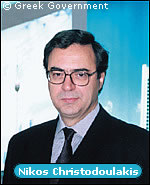
Greek Finance Minister Nikos Christodoulakis has called on European political institutions to take bold steps, such as the modernisation of education and research systems, in order to boost economic growth. Speaking at a two day congress in Athens on economic policy and new sources of growth, Mr Christodoulakis highlighted the strengthening of the knowledge based economy and the promotion of entrepreneurship as two key areas where action was needed. 'Research, innovation and investments in new technologies are prerequisites for growth and determine not only the direction but also the pace of evolution of modern societies,' he said. 'Entrepreneurship is of course the key to mobilising [...] new technologies and converting [them] into products and jobs.' According to the Minister, research, innovation and new technologies are the key factors for increasing the potential output of any economy, and he reminded delegates that in all but a few exceptions, US funding in these areas is well ahead of that of the EU. Mr Christodoulakis used the example of biotechnology, stating that under investment in the field has led to what he described as 'a significant brain drain from the European Union to the United States', where investments by pharmaceutical and biotechnology companies are higher. The Minister called for institutional reforms to address such issues: 'At an institutional level, bold steps and innovations are needed, such as the modernisation of the system of education and research, the strengthening of ties between production on the one hand and universities and research centres on the other, as well as the promotion of cooperation between enterprises and research units.' Alongside such measures, Mr Christodoulakis would like to see a higher priority given to the promotion of entrepreneurship in Europe, saying that 'young entrepreneurs and small enterprises do not contribute as much as they could to employment, growth and regional cohesion.' 'To tackle this problem, the obstacles which enterprises face when entering the market must be reduced, procedures must be simplified, exit barriers - such as bankruptcy law - will have to be re-examined, access to business capital and know-how improved, entrepreneurship should be encouraged by the education system,' said the Minister. The need to encourage entrepreneurship, he went on, was the logic behind a new industrial policy for Europe, launched recently by the Commission and currently being debated by EU stakeholders and policy makers. Mr Christodoulakis had a message for anyone who doubted the economic realities that had shaped the new industrial policy: 'It is a policy that is far removed from the policy of subsidies but which nevertheless acknowledges the Europe's new competitive advantages will not be created automatically.' The event in Athens was organised as part of preparations for the Spring European Council, where Europe's progress towards the Lisbon objective of becoming the world's most competitive knowledge based economy will be assessed.
Countries
Greece