


FP6 is a major priority for Serbia, explains Science Minister
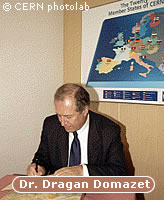
In an interview with the CORDIS Greek Presidency service, Dr Dragan Domazet, the Serbian Minister for Science, Technology and Development, has explained why the Sixth Framework Programme (FP6) is such a priority for his country. After years of isolation and conflict, the scientific community in Serbia is keen to re-establish links with international partners, and Dr Domazet sees FP6 as a vital tool for the promotion of such cooperation. 'For example, mobility programmes of FP6 give Serbian researchers the opportunity to work in foreign laboratories and get useful experience. [...] We have around 10,000 researchers willing to participate in FP6 and we really hope to have a high percentage of involvement,' the minister said. When asked what the main priorities for research policy in Serbia are, Dr Domazet stressed the need to focus on applied sciences, which currently receive only half the level of support given to basic science, in order to encourage innovation and growth. 'The [Science] Ministry's aim is to reverse the relationship between basic and applied sciences. [...] Reversing this ratio is necessary for a small country like Serbia in order to enhance its economic development,' explained Dr Domazet, although he stressed that reversing the trend would be based on increased resources for applied sciences 'rather than on the sacrifice of the current level of basic research.' Another major challenge facing scientists in Serbia is the state of national research infrastructures. Dr Domazet explained that not only have research facilities suffered from years of neglect and under investment, but conflict in the Balkan region also destroyed much of what was left. The Minister explains that while many other countries in the region are lagging behind the EU in terms of their infrastructures, they are still far ahead of Serbia: 'This is the reason we would like Europe to consider us as a special [case] and provide additional support,' he said. The government itself is in the process of introducing a number of measures designed to bring research in Serbia onto a more level playing field with the rest of Europe. They seek to promote innovation and knowledge based enterprises through the introduction of business technology incubators and measures to promote the dissemination of scientific results. Furthermore, Dr. Domazet explains that: 'In order to fully exploit the opportunities provided by FP6, the ministry plans to create a special department for the Framework Programme and employ scientific staff to play the role of NCPs [national contact points].'
Countries
Greece