


Busquin outlines role for science in bringing stability to the Balkans
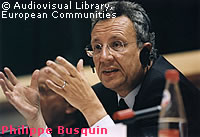
Science can bring stability, EU Research Commissioner Philippe Busquin told a conference on scientific cooperation between the EU and the Balkans on 27 June. Mr Busquin referred to the conference, 'Scientific cooperation between the European Union and the Balkans as a stability factor', as a first, which 'should mark an important moment in the history of research policy in Europe.' At the Thessaloniki Council in June, the EU's Heads of State and Government approved a communication on cooperation with the Balkans aimed at helping these countries move closer to the EU. The communication refers explicitly to research as one such area for collaboration. The Commissioner claimed that the Brussels conference had illustrated a willingness to stabilise and reconstruct the Balkan region. 'I believe that science, research and scientific collaboration clearly have something to contribute here,' he added. Mr Busquin was however realistic: 'We certainly should not expect miracles. Indeed, we know that if science and research can contribute to economic prosperity, to peace and stability; in order to develop, they themselves need a minimum of prosperity and stability. 'But this reciprocal conditioning can translate into a positive dynamic; a virtuous circle in which every step in a plan allows progression in other areas.' The Commissioner also called on the Balkan countries to follow the example of the Mediterranean and Baltic countries and develop regional cooperation. The need for such cooperation is driven by geographical proximity, shared history, similar economies and common problems, explained Mr Busquin. A document entitled 'Shared Vision' has been drawn up by the Commission, outlining the main areas for scientific cooperation between the EU and the Balkans. An accompanying action plan sets out the practical arrangements enabling this cooperation to be implemented, along with the mechanisms to be employed.
Countries
Greece