


More investment in applied science needed for successful participation in FP6, claims Slovenian government
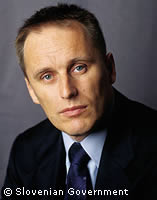
In an interview for the CORDIS Greek Member State service, Slavko Gaber, Slovenian Minister for Education, Science and Sport, claimed that increased funding and better coordination between those working in applied science are determining factors for strengthening Slovenia's research base and ensuring successful participation in the Sixth Framework Programme (FP6). Mr Gaber describes Slovenian participation in the Fifth Framework Programme (FP5) as 'relatively successful', with approximately 1,300 applications submitted, of which around 300 projects were selected for EU funding. However, he says that that not enough has been done to transfer the knowledge gleaned from such participation. 'The main lowlight of [FP5] was the limited transfer of knowledge to industries and to different spectra of society.' This, however, is a general problem in Slovenia, and not one restricted to EU programmes, says Mr Gaber. In order to compete with larger scientific communities participating in FP6, Mr Gaber claims better use needs to be made of public and private investment in basic and applied research. 'Pure science is needed, even in philosophical terms, for the search of truth. Without basic science as a compass, we can be lost in space. On the other hand, if we don't follow the more applied approach, there is a danger for scientific research becoming an aim for itself, which is a very expensive prospect for us,' cautions Mr Gaber. Slovenia currently invests around 1,5 per cent of its gross domestic product (GDP) in research and development activities, a figure which Mr Gaber says the government is trying to increase through the involvement of all potential stakeholders in the development of applied science. 'We are aiming to attract more investment from industry via tax regulations, and to boost the development of applied sciences,' he explains.
Countries
Greece, Slovenia