


France gives priority to space research
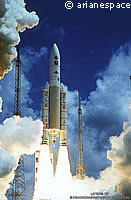
At a time of tight budgetary restraints in the research field, the French government has confirmed it is giving the Centre National d'Etudes Spatiales (CNES), the public body responsible for space technology, an annual one per cent increase in budget for both 2004 and 2005. 'The mastery of space is of the utmost strategic importance' declared Jacques Chirac, the French President. CNES will see its budget rise from 667.5 million euro in 2003 to 676 million euro in 2004, and 682 million euro in 2005. Furthermore, the French contribution to the European Space Agency (ESA) budget will rise to 685 million euro per year, compared to 640 million in 2003, with the promise of maintaining this level until 2009. '2004 is the year of our newfound ambition' explained Yannick d'Escatha, president of CNES. 'Once again the CNES is taking its destiny in its own hands. Our objective is to retain our position as European leader by putting our expertise at the service of the European space policy.' This financial commitment will ensure the continuity of the Ariane 5 heavy lift launcher (ECA) programme. Six launches of Ariane 5 are foreseen in 2004 - the most important one taking place in the summer. Weighing 778 tonnes and offering a lift capacity of nearly 10 tonnes, it is hoped Ariane 5-ECA will prove that technological advances can be reconciled with economic requirements. Simultaneously, the Guiana Space Centre, Europe's spaceport in Kourou, French Guiana, will be reorganised to accommodate not only Ariane 5, but also the Russian spacecraft Soyuz and the small launcher of Italian origin, Vega. The new organisation will be presented to the ESA Council in June 2004. CNES has also scheduled the launch of various spacecraft this year: Helios 2-A (military observation), Parasol, (observation of clouds and sprayers), Demeter (study of earthquakes), Essaim (military microsatellites) and Rosetta, which will be launched on 26 February to meet the comet Churyumov-Gerasimenko in ten years time. In addition, several projects for satellites are planned over the next six years.