


New mood in Europe must be seized, says MEP
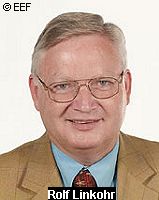
At a news conference held on the last day of the European Science Congress, German MEP Dr Rolf Linkohr emphasised the need for all stakeholders to make the most of the new mood in Europe regarding science. 'Suddenly the profile of science has never been higher,' he said. 'For the first time science is on the first pages of the newspapers.' This is the case not only in France but also in Germany and Spain where the governments have recently promised to increase their budgets for research and development (R&D). 'The fact that Member States have problems increasing their spending in R&D and feel guilty about it is a good thing,' he stated. 'Each step takes us closer to the three percent [Barcelona target].' Dr Linkohr expressed his appreciation of the fact that three science ministers had attended the meeting, namely Noel Dempsey from Ireland, Professor Michal Kleiber from Poland and Mr Mauri Pekkarinen from Finland. He also congratulated Romano Prodi, the President of the European Commission, on his presence. He noted with disappointment, however, that although Europe's finance ministers had been invited, they chose not to come, and regretted also that the European Budget Commissioner, Michaele Schreyer, had also failed to attend. 'I would like to give them the benefit of the doubt and believe that they did not have the time' he said 'but Mr Prodi found the time.' On a more positive note, however, Dr Linkohr remarked that the Congress had been organised with the aim of finding new allies on the road to achieving the Barcelona target of raising European research investment to three per cent of GDP by 2010, and said that the majority of stakeholders had answered the call. Speaking on the subject of the acceding countries, Mr Kleiber acknowledged that they had their weaknesses and needed to strengthen their legal and regulatory framework, increase labour market flexibility, strengthen human capital build-up as well as boost information technology in the private sector. 'However, in the long run, we will be able to contribute significantly to the European Research Area (ERA) thanks to our educated workforce and lower cost of labour. Those two areas alone make enlargement more promising,' the minister emphasised. Andrea Barbagelata, speaking on behalf of small and medium sized enterprises (SMEs), explained that participation in the Framework Programme was becoming more and more difficult for SMEs, as they found it hard to get to grips with the new instruments of the Sixth Framework Programme (FP6); namely Integrated Projects and Networks of Excellence. Even the CRAFT scheme, he said, originally an effective instrument to fund SME research, has recently declined in efficiency due to low success rates and long negotiation procedures. Mr Barbagelata called for a more focused and targeted funding allocation for SMEs; the strengthening of specific actions such as cooperative research projects, collective research, and integrated projects for SMEs, as well as a reduction in bureaucracy and the speeding up of contract preparation. Speaking earlier during the conference, Achilleas Mitsos, the Director General of the Commission's Research DG, announced that in May, the European Commission would publish a Communication on FP7 so that the debate could be launched under the Dutch Presidency. Included in the proposed budget for FP7, he said, will be an amount of no less and than one billion euro a year for the European Research Council. Concluding the press conference, Professor Uno Lindberg from the Royal Swedish Academy of Science said Europe should aim to make science literacy a priority, with science being taught as early as kindergarten. Indeed, the study of science is not only important from an academic point of view, but is also necessary to increase the perception, understanding and acceptance of it within society at large, he finished.