


EU urged to operate more like a business at informal Competitiveness Council
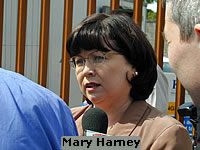
At an informal meeting of the Competitiveness Council in Dromoland Castle, Ireland, on 26 April, EU Commissioners, ministers from 31 countries, and transatlantic business leaders met to discuss the competitiveness challenges facing Europe and European industry. The current chair of the Competitiveness Council, Irish Minister for Enterprise, Trade and Employment Mary Harney, described the meeting as an opportunity for an exchange of ideas between the business community and EU policy makers, and said that its conclusions would help to inform and prioritise the Council's future work in Brussels. At the end of the meeting, Ms Harney said that the private sector had delivered a clear message to politicians. '[We] have been urged this morning to be light on regulation and supportive of innovation,' she said. 'We have got to concentrate on productivity growth and we have got to do business differently.' 'We need much more speedy decision-making for those operating in a market place which is intensely competitive,' Ms Harney continued. 'We were [also] encouraged to quickly agree the IGC [inter-governmental conference] and the new streamlined way of doing business, particularly now in an enlarged European Union of 25.' Earlier, that message had been driven home by various business leaders, including Carly Fiorina, chair and CEO of Hewlett-Packard. Ms Fiorina made the point that companies and countries have to operate on a similar basis, being mindful of competitiveness, making quick decisions, and operating in a flexible manner. 'We need to bring that flexibility and speed to the business of the European Union,' accepted Ms Harney. In her address, Ms Fiorina offered the opinion that opportunities for future success would depend on two factors: focused innovation by industry and targeted investments by government. 'I think we have seen that the most competitive nations in the global economy are those able to invest in three things,' she said. 'First, they invest in education and training of their people. Second, they invest in research and development - to help drive the next generation of growth by nurturing new ideas - and in new technology to bring the fruits of those ideas to the market. And third, they work to create societies grounded in predictability, ones that are focused on openness and transparency and accountability and trust and rule of law [...],' she argued. Another leading industrialist, president and general manager of GlaxoSmithKline Biologicals, Mr Jean Stephenne, delivered a worrying message to Europe's policy makers. He said that, from a business perspective, the EU is regarded as a 'hostile and turbulent environment'. Mr Stephenne said that there is little reward for innovation, a lack of widespread research and development (R&D) collaboration, and few options for investment capital. Improving the environment for R&D would require a new approach to European research systems and strengthened partnerships between the public and private sectors, said Mr Stephenne. Increased private sector investments in research are also needed, and public policy must play a role through targeted subsidies and tax incentives, he concluded. Various business leaders at the meeting also expressed the view that location is a crucial factor in promoting jobs in research and innovation. Even large companies operate to an increasing extent in 'knowledge communities' involving academic institutions and innovative companies. Europe needs to create such communities in order to retain its researchers and innovators, they argued. In summary, the Competitiveness Council identified two key challenges facing Europe: excessive regulation and a resulting lack of competition, and its status as a poor environment for carrying out research compared with the US and other parts of the world. In tackling these problems, the Irish Presidency identified a number of future priorities, which it said it would work on in close cooperation with the next three incoming Presidencies (the Netherlands, Luxembourg and the UK) in order to secure a more attractive economic environment. In the area of better regulation, priorities include avoiding unnecessary and excessive legislation, creating competitive markets and a level playing field for business, and providing improved impact assessments before introducing new measures. In order to stimulate research excellence, the Irish Presidency will continue to strive to increase public and private investments in R&D, align EU research priorities with the needs of industry, adopt the Community Patent as a matter of urgency, and simplify procedures for accessing EU research funding, particularly for small and medium sized enterprises (SMEs), in time for the Seventh Framework Programme (FP7). Closing proceeding, Ms Harney welcomed what she described as 'an extremely useful and beneficial exchange of views and interaction between the business community and EU policy makers.'