


Enterprise and Information Society Commissioner proposes simplified Lisbon strategy
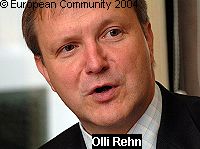
Olli Rehn, the Finnish Commissioner for Enterprise and Information Society who replaced Erkki Liikanen in early July, has said that a major overhaul is needed to get the Lisbon agenda back on track. Mr Rehn, who has also been nominated as the Finnish candidate for José Barroso's future Commission, gave his view on the EU's competitiveness strategy during two informal committee hearings at the newly elected European Parliament. He told MEPs in the Parliament's Environment and Industry, Research and Energy Committees that the EU should focus more on growth and employment, while reducing the overall number of indicators used to measure progress under the strategy. Mr Rehn also chided Member States, saying that in major areas of the Lisbon strategy the EU institutions had acted swiftly, but that progress is being held back at national level. He emphasised that protectionism is not the correct response to growing competition from Asia; rather, he believes the answer lies in research and innovation, and in cutting red tape and bureaucracy for Europe's small and medium sized enterprises (SMEs). The Commissioner called for confidence in the information society, describing information technology as an all-embracing challenge for every level of European society, rather than just another industrial sector. He called on Europe to put the industry's turbulent past behind it, and focus on strengthening public e-services such as e-learning and e-health. A topic of keen interest to both committees, albeit from slightly different perspectives, was that of REACH, the EU's proposed chemicals legislation package. Mr Rehn said he stands by the Commission's draft directive, describing it as an example of better legislation in the EU. He said that an early consultation process had allowed the Commission to remove a lot of red tape, particularly for SMEs. When some in the Environment Committee expressed fears that this streamlining of the proposals had been achieved at a cost to the environment and public health, Mr Rehn said that he did not believe that plans had been watered down, and pledged to maintain a balance between all three pillars of sustainable development - economic growth, environmental protection and social inclusion.