


Barcelona target is 'realistic and achievable' for Austria, states government report
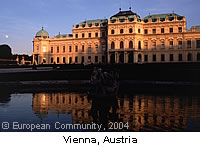
The Austrian Research and Technology Report 2004 states that achieving the Barcelona objective of increasing research funding to three per cent of GDP is 'realistic and achievable'. In order for Austria to meet the target, research and development (R&D) spending would have to increase by 8.8 per cent annually from 2005 - a figure slightly higher than average growth for the period 1995 to 2004, but nonetheless attainable. The percentage of Austria's GDP invested in research is expected to reach 2.27 per cent in 2004, according to the report. Much of this increase is due to higher R&D expenditure within the private sector. Austria has tried hard in recent years to increase its share of R&D and to reduce its reliance upon imported technologies. And the efforts have paid off. According to the third Community Innovation Survey, Austria is one of Europe's most innovative countries. The report recognises that in order to meet the Barcelona target, Austria will have to find more scientists. As things currently stand, 'the output from the Austrian education system will not be enough to close the emerging gap,' states the report. The solution, according to the paper, is to increase the number of women embarking upon a scientific career. Austria has a particularly low percentage of women research personnel - only nine per cent in 1998 - a figure way below the EU average of 15 per cent. A programme was introduced in 2002 in order to address this situation. Austria introduced reforms in April 2004 with the aim of facilitating innovative research. Evaluation became more of a priority as a way of ensuring the effectiveness and efficiency of R&D support. Other changes include: the establishment of a research support society; the reform of the national research funding agency; independence for the Research and Technological Development (RTD) Council; the establishment of a national foundation for RTD; and the founding of 'research house'. The report finds that increased R&D spending has led to both growth and increased productivity. The number of publications originating from Austria has also seen an increase, along with the country's citation rate. The most important funding mechanism was found to be non-repayable grants, at least in the eyes of businesses, while Austrian small and medium sized enterprises (SMEs) were found to receive more R&D support than larger companies. The report notes the rapid internationalisation of Austrian research during the 1990s. Two reasons are given: the increasing number of foreign companies carrying out R&D in Austria, and the involvement of Austria in the EU's research programmes. The Research and Technology Report 2004 highlights how Austrian researchers demonstrated relatively high interest in the new instruments of the EU's Sixth Framework Programme (FP6) in comparison with other countries - Integrated Projects and Networks of Excellence. However, the report claims that it will be difficult for Austria to replicate the high participation figures obtained for FP4 and FP5 now that the average EU funded project is much larger. Participation in the first FP6 call for proposals by Austrian researchers was significantly lower than was the case under FP5. Austria is one of the most favoured countries within the EU for the establishment of offshore research activities. Germany tops the list of countries carrying out research in Austria, responsible for 43 per cent of foreign research. The US is second with 12 per cent, and Switzerland is third with ten per cent. The report concludes that Austria is an attractive location for foreign companies wishing to carry out research because of its favourable tax regulations with regard to R&D, its highly qualified research teams and their availability, and the scale of direct R&D support. 'The reform of the Austrian support system ultimately serves to fulfil the ambitious goals of Lisbon and Barcelona,' states the report. 'The European Commission has determined that Austria's technology policy is, to a large extent, tackling its [the Commission's] tasks and recommendations with regard to strengthening its weak technology base.'
Countries
Austria