


EU project helps the hard of hearing to communicate by telephone
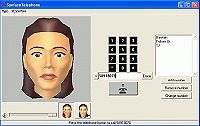
An EU funded project aimed at developing a talking face telephone that can assist hard of hearing people in their use of an ordinary telephone is showing promising results. Over the last three years, the European Commission has provided 1.27 million euro to the Synface (synthetic face) project, financed under the Fifth Framework Programme (FP5). The project brought together partners from Sweden, the UK and the Netherlands, who have developed a software programme that creates an animated face synchronised with speech. 'The Synface system is an important step in helping people with hearing difficulties communicate, it assists them in using the phone through providing not only audio communication but also visual,' said Inger Karlsson, the project coordinator of the information society technologies (IST) project. Synface runs on an ordinary computer or laptop and can be connected to any type of phone, including a mobile phone. The system works by recognising the different sounds in speech from the person at the other end of the line and realistically recreating the lip movements on an animated face displayed on the computer screen. Lip readers can therefore follow the conversation visually as well as audibly. Ongoing trials in the UK show that 84 per cent of users found the system helped them recognise words, while 74 per cent said it made telephone conversations easier, helping them to converse normally. 'Most of the trial users were very positive about the system, although some got more out of it than others as its efficiency depends on how well a user can hear and also on how well they can lip read,' Dr Karlsson explained. 'Even so, it has distinct advantages over other techniques.' Because Synface recognises sounds rather than words, it considerably reduces the time it takes the lip movement to be generated. Furthermore, by concentrating on sounds, the system can represent words it has not encountered previously and can therefore be employed in multiple languages. With over 80 million Europeans suffering from hearing loss, the market for such a system is huge, especially as health problems related to hearing are predicted to increase over the next few years. 'With an aging population in Europe the number of cases of hearing impairment on the rise, some studies are predicting that people will start suffering hearing problems earlier in life because of the high levels of noise young people are exposed to today,' explained Dr Karlsson. Furthermore, she outlined how the hard of hearing may not be the only beneficiaries of the system. The multi-modal speech approach can be of assistance to other users in noisy environments and to users with a different native language than that of the spoken language. So far Synface works in English, Swedish and Dutch and recognises different regional dialects. Currently in final tests, the project team hopes to distribute the Synface software commercially within the next two years.
Countries
Netherlands, Sweden, United Kingdom