


Building an innovative society: a challenge for Latvia
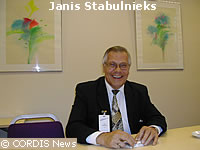
At a time when policy makers and experts in even the EU's most developed economies are wrestling with the challenge of making their societies more innovative, the task facing the new Member States of the former Soviet Union must seem a particularly daunting one. Having made the transition from command to market economies during the last decade, these countries must now integrate themselves into the single market and work towards achieving the ambitious goal adopted by all EU Member States, old and new, of transforming Europe into the world's most competitive knowledge based economy by 2010. In the case of Latvia, the scale of the task was well summed up by Gundega Lapina, a project manager in the country's Innovation Relay Centre (IRC) and one of the participants at the Baltic Dynamics 2004 conference. 'The promotion of innovation [in Latvia] is a particular challenge, as we have only just created our national innovation programme and are still at the start of the process. It's hard to find people who really understand the concept of innovation, even among experts and professionals,' she told CORDIS News. As a result, Ms Lapina reveals that rather than trying to create innovative partnerships between Latvian companies and those in other countries, at this stage most of the work of the IRC is currently focused towards raising people's awareness of innovation and introducing the innovative concept and culture. 'National innovation strategies can be adopted - but changing cultures and systems is a different story,' says Ms Lapina. Janis Stabulnieks, managing director of the Latvian Technology Centre, agrees. Dr Stabulnieks welcomes the national innovation strategy and its accompanying action plan as good initiatives, but stresses that much still remains to be done. 'To understand economic development, one has to understand the innovation system, which covers education, business, science, finance and legislation. All these components have to be covered, or the innovation system will fail,' argues Dr Stabulnieks. 'Furthermore, society must be made to understand why these components are important; they must buy into the innovation concept. Only then can we really begin to create a knowledge based society,' Other obstacles standing in the way of Latvia's transition to a knowledge economy, according to Dr Stabulnieks, include a deficit of students entering technical higher education faculties, weak university-industry links, a lack of innovation support systems such as consultancies and venture finance organisations, and a proliferation of red tape. Edvins Karnitis, a professor from Riga Technical University and an advisor on innovation to the Latvian government, revealed that the national innovation strategy is based on two main elements. One is the re-industrialisation of Latvia's traditional sectors, such as the wood, food and services industries, while the second targets the development of new knowledge based sectors. 'This [second] element of the strategy should not seek to define specific sectors, but should be based on criteria such as knowledge creation, education, added value, and sustainability,' he argued. According to Professor Karnitis, government activities in support of the strategy should focus on the modernisation of technology and infrastructure, and the provision of tax breaks for research and development (R&D) investments by the private sector. 'The low private investment in research is a real problem,' he says. 'The EU's 'two-thirds' target is not realistic at the moment - we must consider how to encourage business R&D investments and then apply the solutions.' Given his eagerness to see the fine words contained in the strategy backed up by action from the government, it may be an encouragement to Dr Stabulnieks that in a statement prepared for the opening of the conference, the Latvian Minister of Economy Juris Lujans said: 'The sustainable provision of knowledge must be based on a full system of innovation [...]. I must emphasise that innovation starts with people, not just research, science and business, and in order to establish a community of innovation the public must be told about innovation too. The unity of society is one of the cornerstones of an innovative economy.' This signals that there are those at the highest levels of Latvian government who do understand the full nature of the task ahead of them. You can be sure that Dr Stabulnieks will be following developments closely to ensure that his government's deeds match the sentiments.
Countries
Latvia