


Dutch ministers target better regulation for a competitive Europe
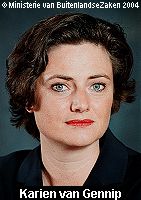
Action must be taken at European, national and local level to reduce the regulatory burden on individuals and companies if the EU is to achieve its Lisbon goals, the Dutch Ministers for Finance and Foreign Trade have told a conference in Amsterdam on better regulation. Economic growth in the EU is currently too weak to realise the goal of becoming the world's most competitive knowledge based economy by 2010, and one of the reasons is the quantity of regulations that entrepreneurs have to deal with, they argue. Foreign Trade Minister, Karien van Gennip, pointed to 'regulations which make it more than ten times harder to start a company in Europe than in the United States of America. This is a serious problem, and we should deal with it as a matter of urgency.' Offering an example of what can be achieved through better regulation, Ms van Gennip said that when companies in the Netherlands were invited to 'name and shame' those rules that hindered them most, they identified over 800 measures. 'The bulk of the problems reported have been solved by better coordination,' she revealed. 'It often turned out that not the rule itself was the problem, but the interpretation of local inspectors.' For example, some businesses had been told by fire inspectors that their fire doors should swing outwards to aid escape from the building, while safety inspectors had insisted that the doors open inwards to avoid injury to pedestrians that might be passing outside. 'Both claimed the authority of a different regulation,' explained Ms van Gennip. In order to tackle this problem on an EU level, Finance Minister Gerrit Zalm revealed that the Dutch government and the governments of Ireland, Luxembourg and the UK had made a commitment to keep the issue of better regulation on the European agenda throughout 2004 and 2005. Specifically, they pledged to further develop impact assessment procedures, develop a way of measuring administrative burden on business, and identify priority areas of existing Community law for simplification. Furthermore, in a joint initiative by the Irish and Dutch EU Presidencies, Member States were asked to submit their concrete suggestions for simplification. So far 21 countries have responded with over 300 suggestions, which Ms van Gennip described as a 'very impressive response'. In conclusion, Ms van Gennip reminded participants at the conference that it is only European companies that can fulfil the promise of the Lisbon goals - policy makers can simply remove the obstacles. 'This requires a new mindset for the civil servants of today. They should continuously ask themselves: is this rule really necessary? Doesn't it conflict with other regulations? Doesn't it create too much paperwork for companies?' she said. 'We'd better spend more time ourselves preparing good legislation, than requiring companies to invest time and resources in complying with poor quality legislation for which we are responsible. [...] The stakes are high, our timetable is tight - let's show the public what we have got.'