


In an ageing Europe, nutrition and health must be given priority, says Commission
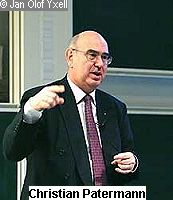
Preparing for old age with adequate nutrition has been proven to lengthen life expectancy, says Christian Patermann, Director for biotechnology, agriculture and food in the European Commission's DG Research. Speaking at a press conference to present three Fifth Framework Programme (FP5) projects on nutrition for the elderly, Dr Patermann explained that in an ageing Europe this type of research is essential. 'The number of people over 80 is set to rise from 21.4 million in 2000 to 35 million in 2025 in the EU25' said Dr Patermann. 'It is therefore extremely important to carry out research in healthy ageing as it has consequences not only of the quality of life and healthcare costs but also on employment and competitiveness'. The three projects presented, 'Lipidiet', 'Optiford' and 'Crownalife' all show that appropriate diets could reduce the occurrence of Alzheimer's or osteoporosis, and generally improve health among the elderly. 'Lipidiet', is aimed at preventing the onset of Alzheimer's disease through a diet based on lipid components. As the project coordinator, Tobias Hartmann from the University of Heidelberg in Germany said that Alzheimer's is a personal tragedy and a major challenge for European society and its healthcare system. 'Currently, the life time risk of contracting this disease is 30 per cent,' said Dr Hartmann. 'However, a delay of the disease by just ten years is estimated to reduce patient numbers by over 90 per cent. While there is already a drug-base therapy to fight this disease, we are now developing a diet-based approach for prevention,' added Dr Hartmann. According to Dr Hartmann, a diet that can delay the onset of Alzheimer's has now been designed. The consortium has started clinical trials to validate its effectiveness in humans. The second project, Optiford, is to develop a strategy for optimal vitamin D fortification to fight osteoporosis. 'Every 30 seconds someone in the EU has a fracture as a result of osteoporosis, said scientific secretary Rikke Andersen from the Danish Institute for Food and Veterinary Research. 'With the increase in life expectancy, the annual incidence of hip fractures in the EU is estimated to more than double over the next 50 years.' 'It is important to invest in your bone bank while you can,' added Dr Andersen, explaining that the project is investigating vitamin D status in the healthy European population as well in risk groups. Vitamin D deficiency has been found to be prevalent all over Europe. The project consortium will, therefore, determine the levels of vitamin D that are beneficial. Bread will then be fortified with the adequate quantity of vitamin D. 'We decided fortified bread was the best option because it is eaten everywhere by everyone,' explained Dr Andersen. The third project, 'crownalife' looked into functional food and gut microflora for healthy ageing. As French project coordinator, Jöel Doré from INRA (national institute for agronomic research), explained, the project assessed the effect of ageing on the composition and activities of the intestinal microbiota. The eight partners of the project found that the intestinal microbiota of seniors is more permissive to colonisation leading to various infectious and degenerative diseases. The consortium is now looking into designing strategies to improve the non-specific immune defences of the elderly, as well as specific resistance to colonisation by pathogens. Crownalife is also working with the food industry to develop functional foods combining a probiotic and a prebiotic to modulate the composition of the intestinal microbiota of seniors. 'Research on nutrition for the elderly is revealing new possibilities for the prevention of disease and better health for improved quality of life,' said Science and Research Commissioner Janez Potocnik. 'The elderly form a growing proportion of our population. It is part of our policy on active ageing to ensure people live longer in good health.' 'Nutrition and ageing has been a key issue in FP5 with ten collaborative research projects receiving 22 million euro from the EU,' concluded Dr Patermann. 'While the Sixth Framework Programme has also funded research in that area, it is important that in discussions on the topical priorities for the next framework programme, the issue of diet and health be given high priority again.'