


COST celebrates 30 years of European scientific collaboration
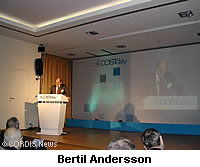
According to the former Research Commissioner and current MEP Philippe Busquin, while collaboration is needed in order to reinforce the European Research Area (ERA), there is no single formula for how scientific collaboration should be structured. One model that has certainly enjoyed great success, however, is the COST programme, which celebrated 30 years of 'cooperation in the field of scientific and technical research' at an event in Brussels on 30 November. COST is the original instrument for scientific cooperation in Europe, predating the European Science Foundation (ESF) and the EU's research framework programmes. According to Francesco Fedi, President of the COST committee of senior officials, its success as an instrument is thanks to a number of factors. There is its bottom-up approach, whereby scientists themselves propose new so-called 'COST actions'; its à la carte rules of participation, which ensure that only those countries who want to participate in an action do so; its openness and equality, which allows researchers from anywhere in the world to collaborate; and its flexible and agile management structures. 'COST is a fast and flexible framework for getting excellent scientists together,' said Professor Fedi. The 19 European countries that founded the programme have since grown to 35. It is funded through the framework programme, and is set to receive between 50 and 80 million euro under the Sixth Framework Programme (FP6). COST actions are described as networks of coordinated national research projects between at least five countries. They forge new contacts between scientific teams working in the same or similar fields by providing funding for networking activities, publications, training and short exchanges of researchers. And while 20 million euro per year may seem like a relatively small budget, supporters of COST point to the fact that the projects that COST actions cover actually represent estimated national funding of over 1.5 billion euro per year. According to Professor Fedi, COST has generated 'scientifically important results, with thousands of papers having been published in the leading global journals. 'It has also contributed to European competitiveness - the development of the GSM standard, for example, was helped by a COST action,' he said. Professor Fedi also believes that COST has played a role in building the ERA, saying that a number of Networks of Excellence evolved from earlier COST actions, including six in the field of telecommunications alone. Bertil Andersson, Chief Executive of ESF, considers COST as a sister organisation to his own. 'COST and ESF are both networking structures dedicated to high quality European research whose trademarks are collaboration,' he said. Europe has to get its act together in the global context of research, said Professor Andersson, and this doesn't just require competition, but more cooperation as well. He suggested 'world COST actions' as one possible tool for achieving this. 'This year has convinced me that [COST and ESF] have different strengths, and must therefore work synergistically. [...] COST, I believe, should continue to strengthen activities in the networking of scientists while ESF focuses on networking national funding agencies, thus combining a bottom-up and top-down approach,' Mr Andersson concluded. Looking forward, Professor Fedi takes a positive view of the Council of Ministers' endorsement of COST, and its invitation to the Commission to strengthen its ties with the programme. He expects COST to continue contributing to the ERA, and referring to the current debate on future EU support for research Professor Fedi claimed that COST can make a contribution under all six pillars, and especially in the networking of national programmes and researchers. Professor Fedi finished by underlining the high regard in which the programme is held by the European scientific community, quoting an anonymous response to an expert panel assessment of COST activities: 'If COST didn't already exist, it would be necessary to invent it.'