


EU funds methane in sea floor research
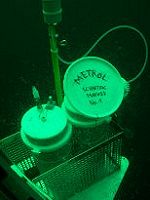
The European Commission is funding Europe's only multi-disciplinary study of methane production and retention in the sea floor. The project, called METROL (Methane fluxes in ocean margin sediments: microbiological and geochemical control), is funded under the Fifth Framework Programme (FP5) and links geophysics, geochemistry and microbiology to provide the critical data and understanding needed to predict the possible future impact of seafloor methane on global climate change. 'Methane is an aggressive greenhouse gas when emitted into the atmosphere. Vast amounts of methane are formed in European margin sediments leading to complex carbonate structures, and to enhanced methane emission,' explains the consortium, coordinated by the Max Planck Institute for Marine Microbiology in Bremen, Germany. 'These processes are important for environmental quality, for offshore operations of the hydrocarbon industry, and for climate development. The natural mechanisms of methane production, storage and transport in ocean margin sediments are insufficiently understood. However, it is clear that a high percentage of the methane is degraded already in the seafloor, creating an effective barrier,' adds the consortium. The goal of the METROL project is, therefore, to understand the various factors controlling methane production and degradation in ocean margin sediments. The microbiological key process of sub-surface methane oxidation accounts for around 90 per cent of the methane flux in the seafloor and therefore plays a critical role as a barrier against methane emission. By studying the Black Sea, North and Baltic Sea regions, as well as the barrier against methane leakage which can be found in those regions, METROL hopes to elucidate how this methane barrier may become inefficient or may even fail due to the effects of global change. 'This process must be understood if we are to quantify current methane fluxes in marine sediments and predict the effect of environmental change on sea floor methane release,' explain the partners - experts from seven different European countries. The project will aim to establish high-quality data on the processes responsible for the formation, accumulation, transport and oxidation of methane in selected European margin sediments. It will also aim to determine the position and efficiency of the sub-surface methane barrier relative to the total carbon flux, and to develop analytical and predictive models of the complex processes determining methane fluxes in the sea floor and their regulation by environmental change. METROL will be finalising its seasonal sampling, hydro-acoustic surveys, biogeochemical analyses, modeling and GIS based visualisation by October 2005, says the consortium. A public symposium will then present the project results to the scientific community.