


Social partners underline their support for Commission's revised Lisbon strategy
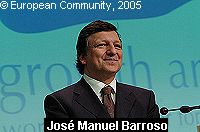
Organisations representing European employers and workers have given their strong backing to the Commission's updated Lisbon agenda, saying that it remains as valid and necessary as when it was first introduced in 2000. The social partners spelled out their position on the recent mid-term review of the Lisbon strategy at the European Tripartite Social Summit in Brussels on 22 March, where they met representatives of the Commission and the current and future EU Presidencies. In a joint declaration, the five employers' and trade unions urge the Spring European Council to 'grasp the opportunity of the mid-term review to restore confidence in the Lisbon strategy'. The social partners also express their support for the Commission's proposal that Member States should prepare national Lisbon programmes to bridge the delivery gap. The declaration specifies the key macro-economic elements which the social partners believe should underpin European competitiveness. Under the heading 'innovation', it targets innovation in products as well as processes, and calls for research and development (R&D) efforts to be focused on those products, activities and processes that offer real prospects for economic growth. Under a section on the environment, the joint declaration demands policies that strike the right balance between long-term benefits and short-term costs, 'which implies: promoting eco-efficient and energy saving technologies, [and] carrying out extended impact assessment of policy proposals.' Following the Tripartite Social Summit Vladimir Spidla, EU Commissioner for Employment, Social Affairs and Equal Opportunities, told the social partners: 'Your joint declaration shows that the social aspect of the Lisbon strategy has not been dropped as so many feared over the past weeks. I welcome that you have a common vision of the challenges facing us and how we should tackle them.' Commission President José Manuel Barroso added: 'Europe can build strong partnerships to achieve prosperity, solidarity and security for the continent and will be committed to further develop the European Partnership for Change and to strengthen the role of social dialogue.'