


UEAPME calls on Luxembourg Presidency not to cut budget for competitiveness
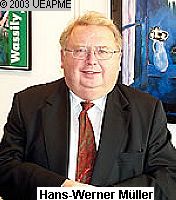
Cutting spending on research and development (R&D) would be a major step backwards, says the European association of craft small and medium sized enterprises (UEAPME), in response to a reported proposal by the Luxembourg Presidency to reduce spending on research and competitiveness programmes by 50 billion euro. Speaking at conference on 'Competitiveness and Innovation for SMEs: Discussion of the new Competitiveness & Innovation Programme (CIP)', which took place in Brussels on 24 May, UEAPME Secretary General Hans-Werner Müller expressed his opposition to any such proposal, calling it a 'serious mistake'. 'It is outrageous that Member States are proposing to slash the proportion of the budget allocated to research and innovation less than two months after the they agreed to focus on growth and job creation in EU. How can the European economy be expected to improve if spending in key areas is cut?' said Mr Müller. 'It is widely accepted that the EU is falling further and further behind other global economies, yet the Presidency is proposing to dramatically reduce spending on the very initiatives designed to redress this malaise. It is a self-destructive proposal,' he added. According to UEAPME, the new Competitiveness and Innovation Programme (CIP) should be made more concrete by assigning specific funding for promoting innovation in small businesses. To ensure this, focus on SMEs should be explicitly included under the title of the CIP as was the case in the previous Multi-annual Programme, which was 'especially for small and medium-sized enterprises'. In addition, says UEAPME, the CIP should be used an instrument to implement the ten action lines of the Charter for Small Enterprises. Furthermore, there is also a need to avoid a narrow definition of the term 'innovation' under the CIP. Currently, the programme places a disproportionate emphasis on high-tech and high-growth firms, at the expense of the vast majority of small businesses, which can also make important contributions in the area of innovation, believes UEAPME. UEAPME took the opportunity presented by the conference, aimed at informing MEPs on the CIP, to call on the European Parliament to focus on specific areas such as: prioritising SME-specific impact assessments, and providing funding to address the problems faced by both micro businesses and start-ups in accessing finance for innovation. 'Cutting spending on areas like research and innovation would be a regressive move, which would undermine commitments made by the Heads of State to focus the Lisbon Strategy on growth and jobs,' concluded Mr Müller.