


Commission outlines new strategy for pharmaceutical industry
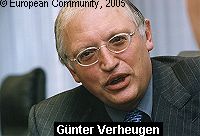
EU Industry and Enterprise Commissioner Günter Verheugen has outlined a strategy to improve the pharmaceutical industry's competitiveness within the EU. The strategy, based on three central features, includes financial incentives to support small to medium-sized enterprises (SMEs) and start-ups, which constitute a major component of the European biopharmaceutical sector. 'Europe has reached a major turning point concerning the future of the pharmaceutical sector in Europe,' stated Mr Verheugen. 'This sector, which was once the bastion of European innovation and the pharmacy of the world, is increasingly under threat [...]. Europe must decide whether we want to continue to be a leading player in pharmaceutical innovation or whether we simply step aside and let others take over this job.' 'I have no intention of stepping aside,' Mr Verheugen continued. 'Not only is the pharmaceutical sector vital to our economy and science base, but it will be a key component in the enormous health challenges which will dominate the political agenda for the foreseeable future. But we need to see an equally strong commitment from industry to keeping Europe as a major centre for innovation.' The Commission's strategy for the pharmaceutical sector aims to enhance the environment for innovation and investment, reflecting on ways to give more market flexibility to the industry and improving quality of information to patients and patient safety. In order to re-establish the EU's research and development (R&D) leadership in the strategic biopharmaceutical sector, a significant increase in R&D spending of up to 73.2 billion euro under the Seventh Framework Programme (FP7) has been proposed by the Commission. According to Mr Verheugen, life sciences and biotechnology will significantly benefit from the planned increase - annual contributions earmarked for life sciences are to be more than doubled. Health-related research as an important part of the life sciences industry will particularly benefit from this stimulus. Furthermore, he added; this support should have a significant leverage effect on private and public research spending. In parallel, the Commission has proposed a new 2.6 billion euro Entrepreneurship and Innovation Programme to support SMEs and start-ups. The newly defined 'platform strategy' will be crucial to promote Europe's competitiveness in research and technological development, continued Mr Verheugen, explaining that the platform will bring together all relevant stakeholders in order to pool limited resources to create added value. In order to enhance competitiveness, the Commission will look at ways in which industry can be given more flexibility in establishing prices without sacrificing the capacity of Member States to protect their healthcare budgets. In addition, explained Mr Verheugen, this reflection should look at the speed of access to the market, the lifting of pricing controls for medicines that fall outside the state sector, parallel trade and the impact of the Transparency Directive. In terms of improving information and safety for patients, the Commission will establish a public-private partnership to improve access to quality information on medicines for the public. The recent safety concerns have highlighted the need for a review of pharmaco-vigilance in Europe, the Commission's objective is, therefore, to have a public debate to consider options for improving the safe use of medicines at both the national and European level. A review of national and European pharmaco-vigilance has already been commissioned. While welcoming the initiative, the European Federation of pharmaceutical industries and Associations warned that European governments have become too 'comfortable and complacent', and have failed to recognise that health is an investment, not a cost. 'The proposals to increase funding are encouraging,' said Tom McKillop from AstraZeneca PLC. 'But it's worth pointing out that the US spends five times more than Europe's average GDP on R&D.' He added that he is concerned that the initiative will be a 'typical European solution' slowed down by regulation.