


'We are charting a new course,' says Figel' on universities
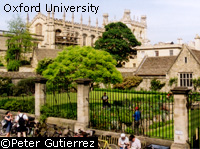
Initiatives aimed at improving Europe's universities are experiencing a change in focus according to Ján Figel', EU Commissioner for Education, Culture, Training and Multilingualism. 'We are now charting a new course,' he said. 'In the past, our action focused on mobility; now the emphasis is shifting towards structural change and reforms at national and institutional level.' The Commissioner emphasised not only that such reforms are now essential in the face of new challenges facing Europe's universities, but that they must be carried out at national level. The European Commission's sphere of competence does not include education and training. Europe's universities are now facing global competition, and are losing out to many institutes outside the continent. A certain number of weaknesses in the European system are not helping, according to the Commissioner. These include: over-regulation; conformity to a single model of university; severe under-funding of both higher education and research; fragmentation into small clusters; relative insulation from industry and society; and insufficient employment prospects for researchers. The Commission has proposed a series of reforms aimed at countering these weaknesses under three headings: attractiveness, governance and funding. In order to address attractiveness - with the ultimate aim of drawing the best intellectuals, scientists and students from all over the world - the Commission recommends implementing the recognition of degrees across Europe and beyond, and making course offerings more relevant to the job market. Under the second heading - governance - the Commission has in mind modifying 'those rules that work against modernisation and efficiency'. Examples include reducing the number of courses defined on a national basis so that it is easier for universities to respond to local or regional needs, and making universities more flexible employers, for example by making it easier for young researchers to join their ranks. On funding, Mr Figel' warned: 'At its current level, lack of funds is a direct threat to the competitiveness of European higher education and research.' The Commission has been doing its part, and will continue to do so, he said. Instruments such as the Seventh Framework Programme (FP7) and the Structural Funds will be used. '[N]ow the ball is in the court of national and regional governments and of university institutions,' he concluded.