


New research backs further CAP reform
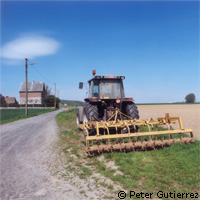
New research on the impact of CAP on Europe's regions provides support for furthering reform of the Common Agricultural Policy (CAP). The study concludes that the current distribution of farming subsidies will lead to even greater inequalities between rich and poor regions in Europe, working totally against the European Union's cohesion objectives. In the first comprehensive study of the effect of CAP on Europe's regions, a team from the Universities of Newcastle upon Tyne and Aberdeen found that, even after the CAP reforms were agreed in 2003 and 2004, rich, core regions in Germany, the UK, France and the Netherlands are collectively taking a greater slice than poorer, peripheral regions in Spain, Italy, Poland and southern and eastern Europe. The findings from their two-year study have been published in a new book, 'CAP and the Regions: The Territorial Impact of the Common Agricultural Policy'. The authors, Professor M. Shucksmith from the University of Newcastle upon Tyne and his colleagues from the University of Aberdeen, criticise the CAP and its recent reforms, which they say do not go far enough to redress the balance between rich and poor. They also make a number of recommendations for changes that they say would make it easier to achieve the EU's cohesion objectives. Currently, CAP subsidies are awarded from two pots, called Pillar One and Pillar Two. Pillar One, worth 90 billion euro per year, about 236 euros per citizen, is made up of direct subsidies paid to farmers and the cost of 'market price support'. This strategy overwhelmingly favours the prosperous, core regions with large farms producing grain, milk and beef, rather than poorer, peripheral regions with smaller farms and products such as olive oil and wine. Perhaps more surprisingly, the newer and much smaller rural development measures, Pillar Two, worth 4.6 billion euro per year, or 15 euro per head, and offering support for environmental farming and 'Less Favoured Areas' such as hills and mountains, also goes predominantly to the richer nations of the EU. The richer countries of North West Europe have more ability to exploit the relevant regulation and to make more use of these measures, according to the researchers. Professor Shucksmith and his team call for money to be redistributed gradually but more quickly from Pillar One into Pillar Two. This would mean reducing the amount of direct subsidies for farmers, decreasing market protection over time, whilst increasing the amount of money available for environmentally friendly farming and rural development measures. They also highlight that the distribution criteria for Pillar Two funds should be changed so that poorer nations get a bigger slice of the money to boost their rural economies. Key recommendations include the distribution of Pillar Two funds according to relative need, and the expansion of schemes such as the European Union's LEADER programme, which funds rural communities coming up with their own solutions to economic problems. The researchers also suggest that, where Member States are usually required to match funding, poorer nations should only have to provide a reduced percentage. The study supports British Prime Minister Tony Blair's calls to EU Member States for CAP reform. Following the last European Council meeting in June, Tony Blair said that more money needs to be directed away from farming production towards technology and research in order to boost Europe's economy. He urged the EU to act before 2013 - the end-year of the current CAP deal. The authors of the study agree with these views and suggest a gradual, well-planned move towards measures that will provide a sustainable future for rural areas. 'The EU's regional policy is intended to build up the poorest regions but the CAP is doing the opposite, not only through its still-substantial expenditures but also through much less transparent import barriers,' says Professor Shucksmith. The study points to the need to develop new elements of the rural economy, which EU citizens will want to continue paying for in the long run, such as environmental projects and community action. The authors also advise that society-wide - and not simply agricultural - arguments should be used to decide and promote the best ways of using available EU funds. The authors believe that their proposals would also help the EU to meet pressure through the World Trade Organisation for EU food prices to be realigned with world levels, and thus give all poorer nations a fairer chance to trade in the global economy. The study is based on the results of a previous project funded through the ESPON (European Spatial Planning Observation Network) 2000-2006 programme, 'The Territorial Impact of the CAP and Rural development policy'. It was partly financed through the INTERREG programme.
Countries
United Kingdom