


Choosing the right trees to improve urban air
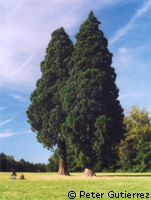
A team of British scientists from the Lancaster University has described a method for evaluating the impact that different tree species have on urban air quality. The method, that can run on a PC, is adaptable for other mid-latitude, temperate climate zones. The classification is designed to help urban planners decide on the species to be planted to achieve sustainable urban air quality. Nick Hewitt, from the environmental science department at Lancaster University (UK), explains: 'Trees do benefit air quality if you plant the right kind. Native broadleaf tree species such as oak, elm, and maple tend to be the worst under our scoring system.' Trees are integrally part of the urban environment. Their presence affects human communities from an ecological, social, economical and physical point of view. It is generally assumed that trees only benefit air quality; however, scientists have known for nearly two decades that the biogenic emissions from certain trees can increase the levels of some pollutants, particularly ozone, in urban air. The main reason that trees are able to help remove pollutants such as ozone and NOx, from the air during the day is a side effect of having their stomates open during photosynthesis. When the stomates are open and there is a higher level of ozone outside the leaf than inside the leaf, there is a diffusion gradient and the pollutants go into the leaf. Inside the leaf, they react and are taken out of the atmosphere. However, the volatile organic compounds (VOCs) produced by trees, particularly the isoprene emitted by deciduous trees, which shed their leaves annually, have been shown to increase levels of ground-level ozone in an urban area. Research in this area is important because national and local governments around the world are beginning to consider tree planting to address a variety of environmental issues, including air quality. The Kyoto Protocol allows countries to meet their carbon emission targets by planting forests to soak up carbon instead of making emissions cuts. Building on earlier research carried out in Atlanta in the US, Dr Hewitt and his colleague Robert MacKenzie used Birmingham, an industrial city with air pollution levels on a par with other large UK cities, as a case study. First they identified the specific tree population of the Birmingham metropolitan area. They then fed the tree population data into a well-known atmospheric chemistry model developed at Cambridge University (UK), the CiTTyCAT, widely used throughout the U.K. for air quality research work. The Urban Tree Air Quality Score (UTAQS) is intended to help urban planners in areas where air pollution is an issue to make the best possible decisions about which tree species to plant. The UTAQS classification is applicable to all urban areas of the UK and other mid-latitude, temperate climate zones that have tree species common to those found in UK urban areas. The modelling approach used could be directly applicable to all areas of the world given the appropriate input data, thus providing a tool that can help to achieve future sustainable urban air quality. UTAQS measures the effects of individual tree species in an urban forest on the city's air quality. The score weighs up the impact of a tree species on different pollutants by comparing tree-induced changes in model pollutant concentrations to air quality standards. The study's results should hold true for any mid-latitude city in a temperate climate and the procedure can be tailored to provide appropriate recommendations for cities in any ecosystem.
Countries
United Kingdom