


Max Planck researchers uncover the mechanisms of a new, more effective vaccine against tuberculosis
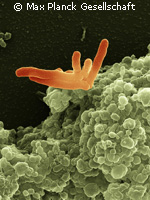
A team at the Max Planck Institute for Infection Biology in Berlin, Germany, has designed a novel tuberculosis vaccine with high vaccine efficacy. With some 2.5 million deaths and nine million new cases annually, tuberculosis (TB), along with HIV/AIDS, is responsible for the greatest number of infectious disease victims worldwide. Estimates suggest that one third of the world's population is infected with TB bacteria. Initially, the pathogens are dormant. The disease later erupts in about ten per cent of those infected, who develop open, contagious tuberculosis. A vaccine against tuberculosis, termed BCG, is available. However, BCG fails to offer protection from the most frequent form of disease: pulmonary tuberculosis in adults. Of particular concern is the fact that an ever-increasing number of pathogens are becoming resistant to conventional medications. Figures from the World Health Organisation indicate that some 50 million people around the globe are infected with these multi-resistant strains. An effective tuberculosis vaccine, therefore, is needed more urgently than ever. In March 2004, to mark World Tuberculosis Day, a Federal-financed German research initiative was launched to develop just such a vaccine. Scientists at the Max Planck Institute for Infection Biology (MPIIB) in Berlin, under the direction of Professor Stefan H. E. Kaufmann, have developed a highly promising vaccine candidate. The vaccine consists of an attenuated bacteria that is very closely related to the TB pathogen, Mycobacterium tuberculosis. BCG has a proven safety record for many decades, but unfortunately it lacks effectiveness. Children can be protected from only certain forms of TB, and there is no protection at all against pneumotuberculosis, by far the most common form of the disease. The protection provided by the presently existing BCG vaccine is assumed to be limited because the BCG bacteria are hidden in cells in the body, inside so-called phagosomes. Professor Kaufmann's group therefore inserted a gene coding for the protein listeriolysin, a protein which causes perforation of the phagosomes, thus making BCG cells available to the immune system to build up immune protection. Recombinant BCG, which expresses listeriolysin, has been created and shown to stimulate far more efficacious protection against tuberculosis than the BCG vaccine currently in use. This new vaccine induces cell death in infected host cells, which leads to stimulation of protection by dendritic cells, the most efficacious antigen-presenting cells. As a result, stronger protection against pulmonary tuberculosis has been achieved in preclinical studies. Importantly, the new vaccine also protects against clinical isolates of the Beijing family. These clinical isolates are frequently multi-drug-resistant and more aggressive, and hence have started to conquer the globe. It has been assumed that the Beijing isolates emerged in response to drug treatment and vaccination. The new genetically engineered BCG could provide an efficacious measure against this threat. The vaccine has been licensed to Vakzine Projekt Management, which will test it in clinical trials in early 2006.
Countries
Germany