


Bipolarisation in the Mediterranean area and stability risks
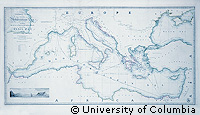
The affluence gap between rich and poor Mediterranean countries has doubled in the last 40 years. A recent analysis of economic polarisation in the Mediterranean basin, performed at the Institute of economic analysis of the Spanish National Research Council (CSIC), concludes that higher polarisation implies greater political instability and warns that 'a very high risk of open conflict exists'. The study, to be published in 2006 as part of the World Bank 'Berlin Workshop Series: Equity and Development', was carried out within the framework of the EU funded project 'Polarization and conflict'. The aim of this multidisciplinary Sixth Framework Programme (FP6) project, coordinated by an economist and professor at the Institute of Economic Analysis (CSIC) in Barcelona, Joan Maria Esteban, is to promote and coordinate research on the conceptualisation, modelling and measurement of polarisation and conflict, and the links between the two. As a result, 'Polarization and conflict' expects to help identify the main forces leading to conflict, to provide tools and indicators for early warning, and to lead to understanding of the role of alternative forms of third party intervention, such as mediation or arbitration in the reaching of an agreement, and the design of post-conflict, viable agreements, including the system of political representation. The project integrates the different approaches that have been developed in the different social sciences and combines models with factual evidence. The results of this research suggest that economic inequality is not enough to analyse social cohesion and potential conflict. The project proposes a new methodological analysis based on the concept of polarisation and a new analytical tool: the polarisation index. Polarisation indices seek to capture the creation of 'clubs' of countries, which display high similarity within, and marked dissimilarity across clubs. One can thus have decreasing inequality - because all the members of a club become more similar to each other - at the same time as increasing polarisation. Hence, it is polarisation, rather than inequality, that best captures the emergence of clusters with opposing interests. This new approach has been used to examine the pattern of development along both shores of the Mediterranean Sea between 1961 and 1998, and shows that over the past four decades, Mediterranean countries have converged towards two different poles -rich and poor - which are more and more neatly defined and splitting further away from one another. If per capita income and population of both groups of countries are analysed with traditional economic tools, such as the Gini index, inequality between the two groups only grew by 18 per cent during this period. When applying the polarisation concept, however, this difference is doubled. The study shows an index of bipolarisation, rocketing from 0.0643 in 1961, to 0.1313 in 1998. In 1961 extreme differences concerning per capita income between countries of both block occurred, with a ratio from five to one between both extremes, namely France and Morocco. But in between, a staggered sequence appeared, with a maximum difference of 46 per cent between successive countries. Whereas in the 1960s, Spain, Southern Italy and Greece were not very far from African-side Mediterranean countries like Morocco or Egypt, at the end of the 1990s, this distance had increased to an almost insuperable extreme. The study acknowledges the success of the European Union in significantly and steadily decreasing inequality in per capita incomes across the European Member States. But as Dr Esteban explains, success by the EU in fostering growth in acceding countries has had the international side effect of widening the gap with respect to the neighbours still outside. And this effect is particularly marked in the Mediterranean basin. Whereas the EU countries, and Israel, are converging in income, the non-EU Mediterranean countries are comparatively poorer. In fact, there is a double effect: while an increasing internal homogeneity is occurring in both the group of richer countries (Greece, Spain, Israel, Italy and France) and in the poorest (Morocco, Syria, Egypt, Tunisia, Algeria, Turkey, Jordan), the widening gap between both groups has been drastically accentuated. Dr Esteban warns that this extreme bipolarisation may be generating a very high risk of open conflict. 'With no stimulating objectives at their hand, we could be heading towards a period of high political instability in the countries of this region,' he concludes.
Countries
Spain