


Commission tells Member States: it's time to back up solid reform programmes with action
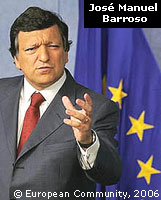
The Commission delivered a clear message to Member States on 25 January in its first annual progress report on the relaunched Lisbon strategy - good, but must do better. In its progress report to the Spring European Council, the Commission welcomes the fact that all 25 EU governments have drawn up national reform programmes (NRPs), many under tight deadlines, as 'an important first test'. Now Member States must implement their reforms in full and on time, it adds. 'My overall message is clear: it is time to move up a gear,' said Commission President José Manuel Barroso, presenting the report. 'The fact that there are 25 national reform programmes on the table speaks volumes about a new level of national commitment. Now the spotlight moves to delivery.' Mr Barroso continued: '95 per cent of what is in these reports is common sense; Member States must make it common practice. They must find the political will to match words with deeds.' The report analyses the three main policy areas identified for action in the NRPs: macroeconomic, microeconomic and employment-related. On the macroeconomic level, Member States have identified budgetary discipline in public finances as being the most important challenge they face. Most tend to favour spending cuts to increased taxation, and many state their intention to set aside resources for strengthening infrastructure, human capital and research and development (R&D). 'However, few [NRPs] are explicit about the budgetary implications of proposed measures,' the Commission notes. In terms of microeconomic measures, strengthening research and innovation is a key priority for all EU countries. Many intend to promote innovative clusters of universities, research institutes and businesses; Facilitating access to finance is also seen as an important issue. 18 out of 25 countries have set national targets for R&D investment, and if all are met the Commission estimates that expenditure will rise to 2.6 per cent of GDP by 2010, short of the collective target of 3 per cent set in Barcelona in 2002. Furthermore, the report warns that 'most programmes do not go far enough to foster a more positive attitude towards entrepreneurship and to encourage more people to start their own business.' All NRPs attach a high priority to attracting and retaining more citizens in employment, notes the Commission, with particular efforts being made or foreseen to improve the employment situation of women, older workers and young or disadvantaged people. 'However, the effectiveness and sustainability of these is hampered by a tendency towards piecemeal policies,' adds the report. Overall, then, the report concludes that the national programmes are 'a good basis for driving through the reform agenda'. However, not all NRPs are of an equal quality, and while in some the content and structure of policy measures taken or proposed is clearly laid out, other lack targets, timetables and budgetary details for their envisaged reforms. 'This will make it more difficult to deliver,' warns the Commission. Integration between the macroeconomic, microeconomic and employment elements of the programmes also requires strengthening in many cases, particularly given that progress in one area often depends on gains made in another. Last but not least, media coverage and public awareness of the reform agenda is also lacking in most countries, according to the Commission, making it difficult to know whether broad sections of the population are even aware, let alone taking ownership, of the strategy. While the Commission has provided a country-by-country analysis of the content, strengths and weaknesses of each NRP, it has decided not to propose formal country-specific recommendations in this first progress report, as the NRPs require time to be fully integrated into national policies and structures. The Commission also wants to foster a strong relationship with Member States based on cooperation and trust. However, the Commission adds that it will not refrain from using all the instruments at its disposal, including country-specific recommendations, should it be deemed necessary. Some, however, criticised the Commission for its attempt to foster a spirit of cooperation with Member States. MEP Alexander Radwan, economic spokesperson for the centre-right EPP Group in the European Parliament, said in response: 'I had hoped for a bolder start. [...] The main problem of the Lisbon strategy is the lack of obligations for the Member States. [...] It would be helpful if the Commission in its evaluation would state the measures needed and thereby make clear what progress individual countries have made.' However others, including the leader of the Alliance of Liberals and Democrats for Europe (ALDE) Group Graham Watson MEP, were more understanding of the position adopted by the Commission. '[T]he chief responsibility for the success or failure of the Lisbon goals of economic growth lies with the Member States. The Commission can take the Member States to water but it cannot make them drink.' For his part, Mr Barroso concluded: 'The Commission has assessed these programmes in the spirit of partnership, without fear or any favour. We have given credit where it is due. We have offered criticism where we think it is needed. [...] Our annual progress report shows that Europe can have confidence. The growth and jobs goals are within reach. What stands in our way is complacency, structural conservatism, the overstating of risks and the understating of chances.'