


Climate double-whammy
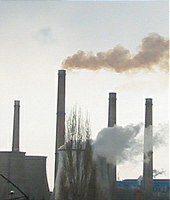
Two reports published on 10 February show that while oil companies are showing record profits, the impact on the environment is more evident than ever - the climate is at its warmest for 1,200 years. The cost on the environment of greenhouse pollution would turn oil company profits into losses if the social costs of burning fossil fuels were taken into account, it is claimed. The reports come a week after the American oil giant Exxon Mobil announced the largest profits ever recorded for a company - USD 36.13 billion (30.18 billion euro). The rest of the oil 'seven sisters' are showing similar jumps in profits thanks to record prices for oil in 2005. However, should the environmental cost of that oil be taken into account, then a report published by the New Economics Foundation (NEF), commissioned by the BBC, suggests that the costs to the environment dwarf those profits. 'UK government income from the fossil fuel sector - conservatively estimated at GBP 34.9bn (51 billion euro) - is greater than revenue from council tax, stamp duty, capital gains and inheritance tax combined,' writes NEF's Andrew Simms. The implication is clear - if alternative sources for power are sought, then this could have an impact on the ability of a government to raise income. Looking at two of the British oil companies, BP and Shell, Mr Simms made a simple calculation based on the UK treasury estimate that every tonne of carbon dioxide causes GBP 20 in environmental damage. 'Combining the emissions that stem from BP's direct activities and the sale of its products leads to 1,458 million tonnes of CO2-equivalent entering the atmosphere, with a damage bill of UKP 29 billion. Subtracting that from the UKP 11 billion annual profit it has just reported puts it GBP 18 billion in the red; effectively bankrupt. The same calculation puts Shell GBP 4.5 billion in the red, even as it reports an annual profit of GBP 13 billion,' he said. Perhaps underlying Mr Simms' conclusions is a second report, which shows the effects of that oil pollution. The report comes from researchers from the University of East Anglia in the UK. The team used temperature measurements leading back to 1856, and evidence from diaries - for example those of people living in Belgium and the Netherlands listing when the canals froze, rings in coniferous trees - wider rings relate to warmer summers, and the composition of ice cores. 'These records extend over many centuries and even thousands of years. We simply counted how many of these records indicated that, in any one year, temperatures were warmer than average for the region they came from,' said Dr Timothy Osborn. Comparing climate change now to the Medieval Warm Period and Little Ice, Dr Osborn told the BBC that 'The last 100 years are more striking than either. It is a period of widespread warmth affecting nearly all the records that we analysed from the same time.' Science published a study in November 2005 indicating that greenhouse gases are currently at their highest levels for 650,000 years.
Countries
United Kingdom